By David
What is an LED display mounting structure? An LED display mounting structure is the frame, wall, or truss that carries the weight of the cabinets and holds the screen in position. It must take the dead weight of the screen and the live loads of wind and handling, and it must do so safely for the whole life of the installation. This 2026 guide explains how to plan the structure and the loads behind it.
A large LED screen is heavy. A wall of cabinets, frames, and cable can weigh many tonnes, and that weight must be carried by a structure designed for it. The screen's image is what the audience sees, but the mounting structure is what keeps it in the air safely.
This guide is written for buyers and project managers planning an LED installation. It covers the mounting options, the load paths, and the wind and safety considerations that decide whether a screen is engineered or merely hung.
LED displays are mounted in three main ways: on a wall, on a truss or frame, and on a ground-support structure. Wall mounting suits screens that fit an existing wall. Truss mounting suits event and rental screens. Ground support suits large outdoor screens that need their own structure.
| Mounting Type | Best For | Key Consideration |
|---|---|---|
| Wall mounted | Indoor and some outdoor fixed | Wall strength and anchors |
| Truss mounted | Events, rental, temporary | Rigging and load limits |
| Ground support | Large outdoor screens | Wind load and foundation |
| Freestanding | Portable indoor | Stability and tipping |
The choice is driven by the site and the screen, not by preference. A wall that cannot take the load needs a ground-support frame. An event screen must be rigged from a truss rated for the weight. Match the structure to the load before choosing the screen size.
A mounting structure carries several kinds of load. Dead load is the static weight of the screen and frame. Live load includes wind, snow, and the forces of handling or maintenance. Dynamic load appears when the structure flexes or when wind gusts push on a large screen. All of them must be considered together.
Wind load is the biggest surprise for outdoor screens. A large screen acts like a sail, and the force rises with the square of the wind speed. A screen that seems fine in calm weather can be unsafe in a storm if the structure was designed for the weight alone and not the wind.
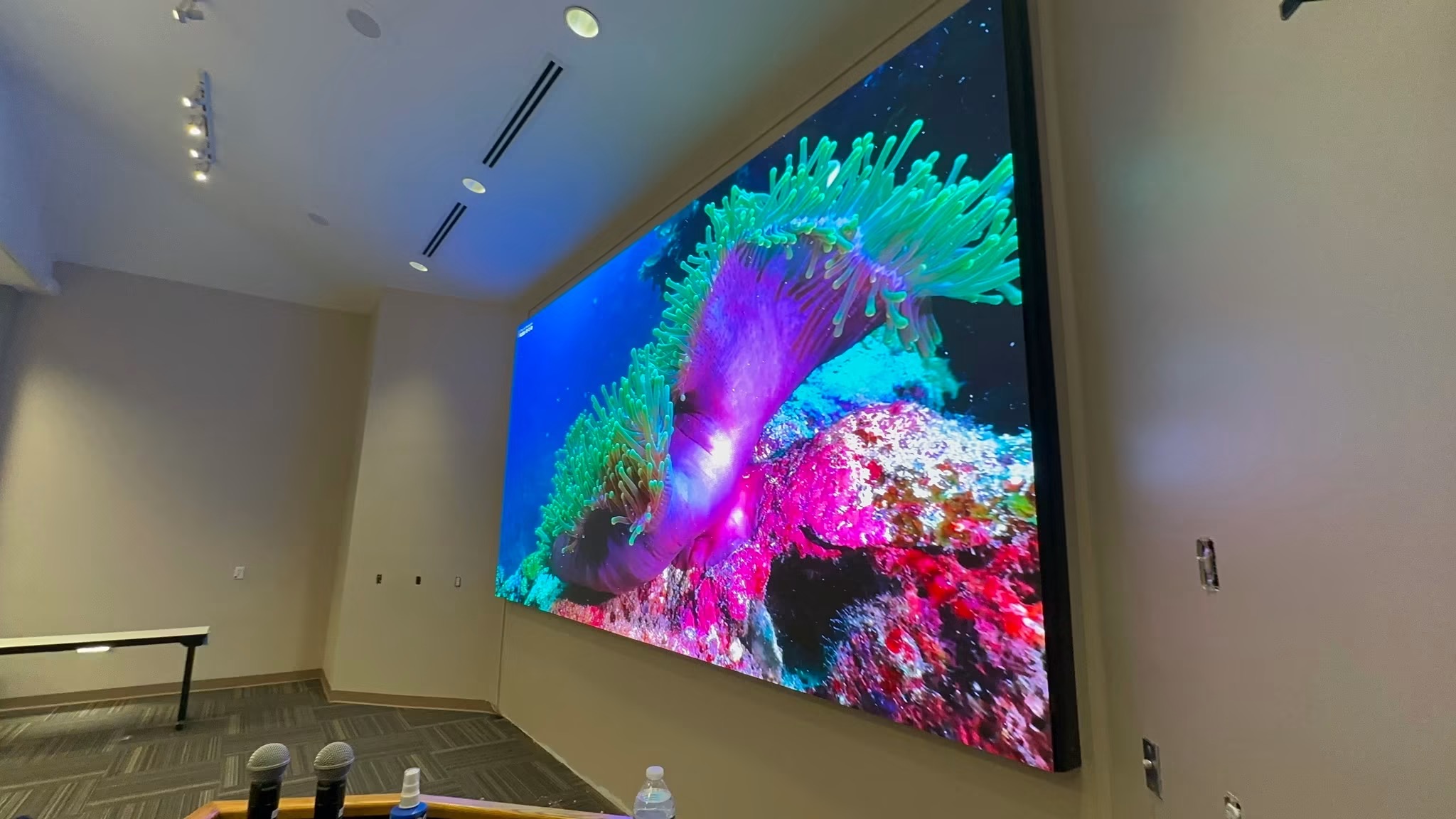
Wall mounting depends on the wall as much as the screen. The wall must be strong enough to take the load, and the anchors must be suited to the wall material. A concrete wall anchors differently from a brick wall or a stud wall, and using the wrong anchor is a common cause of failure.
Get the wall assessed by a structural engineer before mounting a large screen. The engineer confirms the wall's capacity, the anchor type, and the fixing pattern. For heavy screens, a steel sub-frame spreads the load and lets the screen be levelled independently of the wall.
Event screens are rigged from truss, and the truss and motors must be rated for the screen's weight with a safety margin. Rigging above an audience is the highest-risk LED application, and it depends entirely on a correct load calculation and qualified riggers.
Every rigging point, motor, and sling should be rated for the load and inspected before use. The screen's weight, including frames and cables, divided across the rigging points gives the load per point. Add a safety factor and confirm the truss and motors can take it with margin to spare.
Large outdoor screens often need their own ground-support structure with a foundation. The foundation resists the overturning force that wind creates on a tall, large screen. A screen that is bolted to a base without a proper foundation can be pushed over in a storm.
| Screen Size | Wind Exposure | Structure Demand |
|---|---|---|
| Small, sheltered | Low | Simple frame, standard anchors |
| Medium, exposed | Moderate | Engineered frame, wind calc |
| Large, open site | High | Ground support with foundation |
| Very large, coastal | Severe | Full structural design and survey |
Choose the structure for the site's wind exposure, not for a generic site. A screen on an open plain or a coast faces far more wind load than one sheltered between buildings. The structural engineer should use the site's actual wind data when designing the support.
The structure must also allow the screen to be serviced. A wall that cannot be reached for a module swap will be maintained rarely and fail more. Plan front or rear access, walkways, and safe working positions as part of the structure, not as an afterthought.
Maintenance access affects both safety and cost. A screen with proper access is serviced quickly and safely; one without it needs scaffolding or rope access for every repair, which is slow, expensive, and risky. The access design pays for itself over the screen's life.
A large wall must be adjustable so the cabinets align perfectly. Small errors accumulate across many panels, and the seams between cabinets become visible. Adjustable brackets and fine-thread fixings let the installer level and align the wall precisely, which is what makes the finished screen look like one surface.
Alignment is especially important for fine pitch screens, where the gap between cabinets is a small fraction of the pixel pitch. A coarse screen tolerates a little misalignment; a fine pitch screen does not. The mounting design must allow the precision the pixel pitch demands.
A mounting structure is not a fit-and-forget item. Bolts loosen, anchors corrode, and welds crack over years of wind and vibration. A periodic inspection by a qualified person checks the fixings, the anchors, and the structure, and catches the small problems before they become dangerous.
The inspection interval depends on the site and the exposure. A sheltered indoor wall needs little attention; an outdoor screen on an exposed coast needs regular checks. Set the interval from the site's conditions and keep a structural log so the screen's safety record is documented for its whole life.
Write the structural requirement into the project with the loads, the site conditions, and the access plan. Require drawings and calculations from a qualified engineer, stamped where local codes demand it. The screen supplier provides the screen; the structure engineer proves the screen can hang safely.
LED display mounting structure is the part of a project that nobody photographs and everybody depends on. Buyers who engineer the loads, verify the wall or truss, and plan the access get a screen that stands safely and serves its full life, whatever the weather brings.
Keep the structural drawings, the load calculations, and the inspection log with the screen's other documents. If the wall is ever modified or a second screen is added, the next engineer needs to know what the structure was designed for. Documentation is what turns a one-time design into a lasting, safe installation.
Photograph the finished structure before the screen covers it. Images of the frame, the fixings, and the anchor points are invaluable years later when a modification or an inspection is needed. They show exactly how the screen was mounted, which no drawing fully captures once the cabinets are in place, and they take only a few minutes to record at handover time.
Send us your screen size and site, and we will provide the cabinet loads and structure data your engineer needs.
Request Structure DataChat on WhatsApp