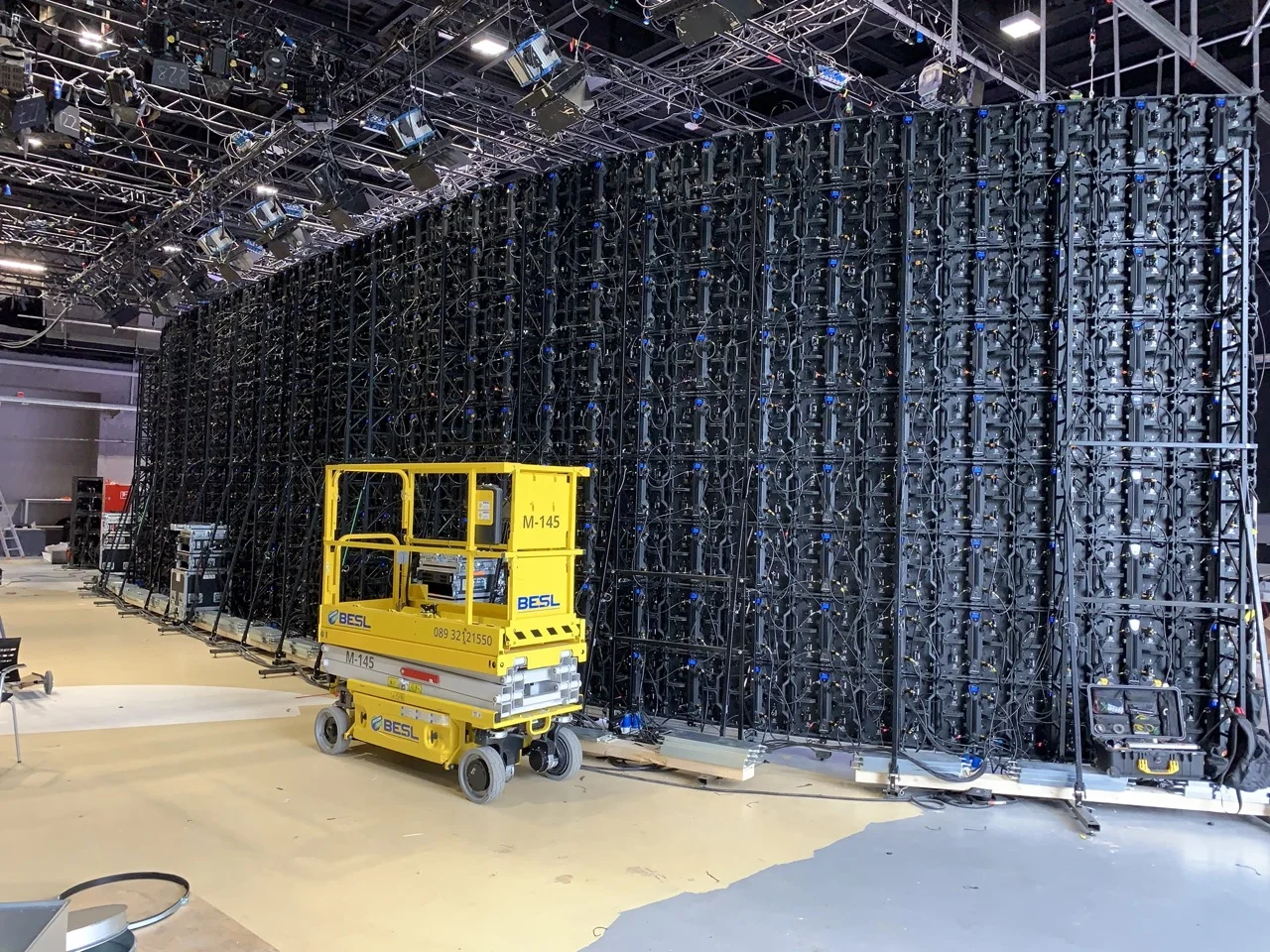
Spain runs on tourism, festivals, and football, and each of those sectors buys LED displays in volume. This guide explains what is driving Spanish demand in 2026, the certification a shipment requires, how goods reach Spanish buyers from China, and which Asia Vision products fit the projects being specified.
Tourism is the foundation of Spanish LED demand. Spain is among the most visited countries in the world, and its hotels, resorts, restaurants, and leisure venues on the coasts and in the cities invest continuously in screens for advertising, entertainment, and wayfinding. Because many of these installations face daylight and run long hours, Spanish buyers tend to prioritise brightness, weather rating, and rated lifetime.
Festivals and live events are the second engine. Fallas in Valencia, Semana Santa processions, San Fermín in Pamplona, and a heavy summer concert and festival season keep rental fleets busy across the country. These projects need cabinets that strike and rebuild quickly, and side screens and stage backdrops at pitches suited to audiences standing several metres away.
Football and sport form the third pillar. La Liga stadiums, basketball arenas, and multi-sport venues use LED for perimeter boards, big screens, and hospitality areas, and Spanish clubs are among the most commercially sophisticated users of stadium displays in Europe. The demand here is for high-brightness outdoor panels with the refresh rates that broadcast cameras require.
Retail, transport, and public venues complete the picture. Madrid and Barcelona concentrate flagship stores and shopping centres, the Mediterranean cruise ports and airports deploy information and advertising screens, and city councils invest in digital signage for civic messaging and tourism information. The breadth of these applications is why Spain supports a wide range of LED specifications rather than a narrow one.
A further driver is the rental market's own professionalisation. Spanish rental houses increasingly own their inventory rather than sub-hiring, and they buy cabinets with an eye on total cost across several seasons of transport and rebuilding. That shifts the buying decision toward build speed, cabinet durability, and spare-part availability, which are exactly the criteria a fleet operator measures rather than the criteria a single installation measures.
Spain follows the European Union framework, so CE marking is the mandatory legal requirement supported by a declaration of conformity and test reports. Some Spanish clients ask about the voluntary AENOR mark, which can appear in public tenders even though it is not legally required. The table below sets out what to prepare for a Spanish shipment.
| Item | Market | What It Covers | Buyer Action |
|---|---|---|---|
| CE marking | Spain and the EU | Low Voltage, EMC, Radio and RoHS directives | Hold the declaration and reports with the goods |
| AENOR mark | Spain | Voluntary Spanish quality and safety mark | Add only when a tender or client requires it |
| RoHS report | Spain and the EU | Restricted substances in modules and plastics | Ask for a material-level test report |
| EN 55032 and EN 55035 | Spain and the EU | EMC emission and immunity standards | Confirm it names the shipped product family |
| Ecodesign and ErP | Spain and the EU | Energy and standby power requirements | Request power draw at a stated brightness |
| Nameplate and label | Spain | 230 V 50 Hz rating matching the declaration | Review artwork before dispatch |
Spain is served by busy Mediterranean and Atlantic gateways, which gives importers flexibility on both the east and west coasts. Valencia and Barcelona carry most container traffic, while Algeciras and Bilbao cover the south and the north respectively. Because the country is large, the port choice has a measurable effect on the inland leg, so it is worth matching the gateway to the installation rather than defaulting to whichever sailing is cheapest.
| Route | How It Works | Typical Transit | Best For |
|---|---|---|---|
| Sea via Valencia | Direct Mediterranean service from South China | 28 to 36 days port to port | Madrid, eastern and central Spain |
| Sea via Barcelona | Mediterranean gateway with strong rail and road links | 28 to 36 days port to port | Catalonia and northeast Spain |
| Sea via Algeciras | Atlantic gateway near the Strait of Gibraltar | 30 to 40 days port to port | Andalusia and southern Spain |
| Sea via Bilbao | Northern Atlantic port for Basque and north coast projects | 32 to 42 days port to port | Northern Spain and cross-border traffic |
| Air freight | Shenzhen to Madrid Barajas or Barcelona El Prat | 5 to 8 days | Spare modules and urgent kits |
For outdoor and stadium work the D-PRO range is the primary recommendation. Rated IP65 with brightness above 8000 nits, it stays readable in direct Spanish sunlight, which is a genuine requirement in the south and during the long summer. The wide dimming range also lets a venue drop to a comfortable evening level without losing grey-scale detail, which residents and city authorities appreciate.
For rental and touring work the X series suits the festival circuit. Its 500 by 500 millimetre cabinets weigh 6.5 kilograms, support front and rear service, and are engineered for repeated assembly. At P2.6 and P3.9 the pitch covers main-stage and side screens, and the quick-lock frame keeps changeover time short when a fleet is moving between festivals.
For permanent indoor installations the CV-PRO COB line fits hotels, retail, and corporate spaces. The chip-on-board surface reaches around 10000:1 contrast and hides the lamp gap at close range, so a reception wall or shop window reads as a continuous image. Refresh rates of 3840 Hz and above keep the picture stable under cameras, which matters in press-facing hotel and retail environments.
Because the pitch range spans P0.9 to P20, each Spanish surface can be matched to its own viewing distance. A beachfront facade seen from a road and a hotel lobby wall seen from a metre are very different products, and specifying them separately is usually where the largest value in a Spanish project is found.
Coastal exposure is a further consideration that Spanish buyers raise often. Salt air, wind-driven rain, and strong ultraviolet light all stress an outdoor installation, so we recommend confirming the mounting, drainage, and sealing approach for any screen near the coast rather than assuming a standard IP65 enclosure is sufficient in every position. For inland stadiums and city facades the standard outdoor build is usually adequate, but a coastal resort benefits from a short conversation about exposure before the order is fixed.
Asia Vision Technology manufactures indoor COB, rental, and outdoor LED displays at our Shenzhen facility and holds CE, FCC, and RoHS certification for export markets. The pixel pitch range runs from P0.9 to P20, our CV-PRO indoor COB line reaches 10000:1 contrast at refresh rates of 3840 Hz and above, our X series rental cabinets measure 500 by 500 millimetres at 6.5 kilograms, and our D-PRO outdoor range is rated IP65 with brightness above 8000 nits.
For Spanish buyers we confirm the destination market and the project constraints before the order is fixed, share the cabinet dimensions a venue or facade plan has to accommodate, and issue compliance documents against the product family that actually ships. Orders are produced in 15 to 20 working days with a 3-year standard warranty, and we support integrators and venue operators through commissioning.
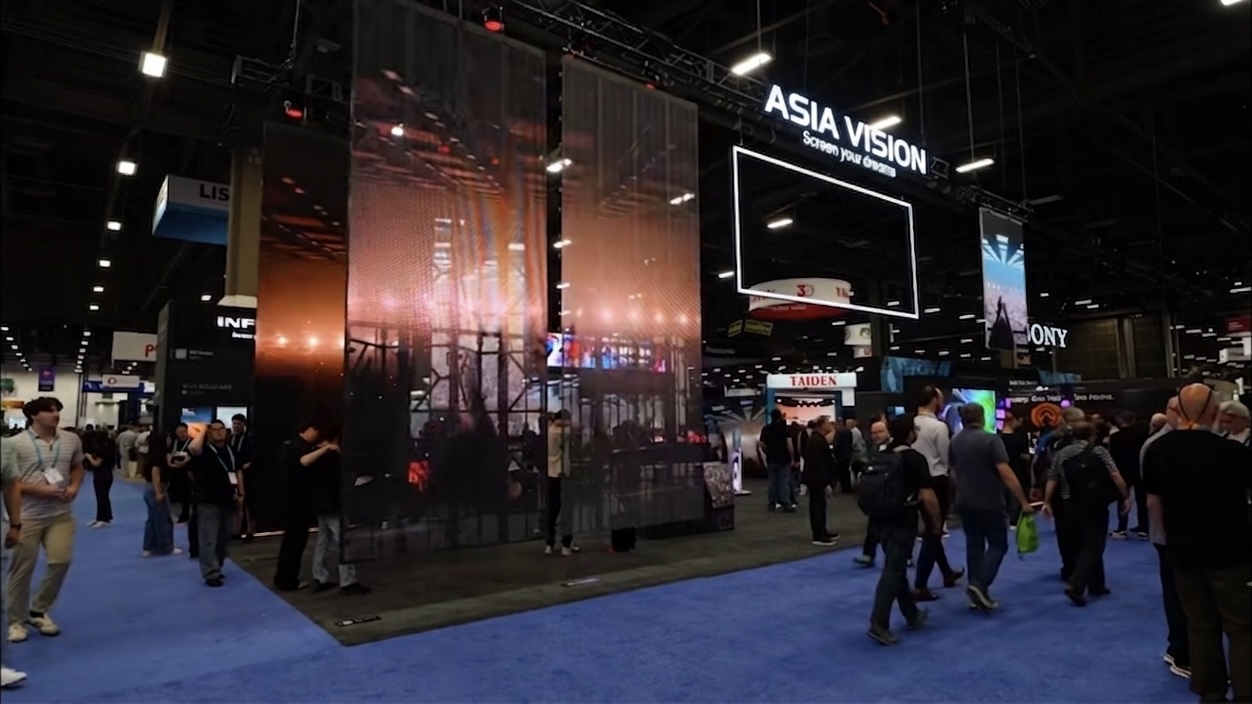
For this requirement our range covers it directly: the COB Z rental series (7680Hz flip-chip) and the COB ZH touring series (sealed, wind-rated).
Related reading: Event and rental LED screens in Saudi