A rental LED panel and a fixed installation panel can carry the same pitch and the same brightness rating, yet they are very different products. The fixed panel is installed once and left alone for years. The rental panel is built, struck, trucked, dropped, rigged, and rebuilt every week, often by a different crew in a different city. That duty cycle changes what matters.
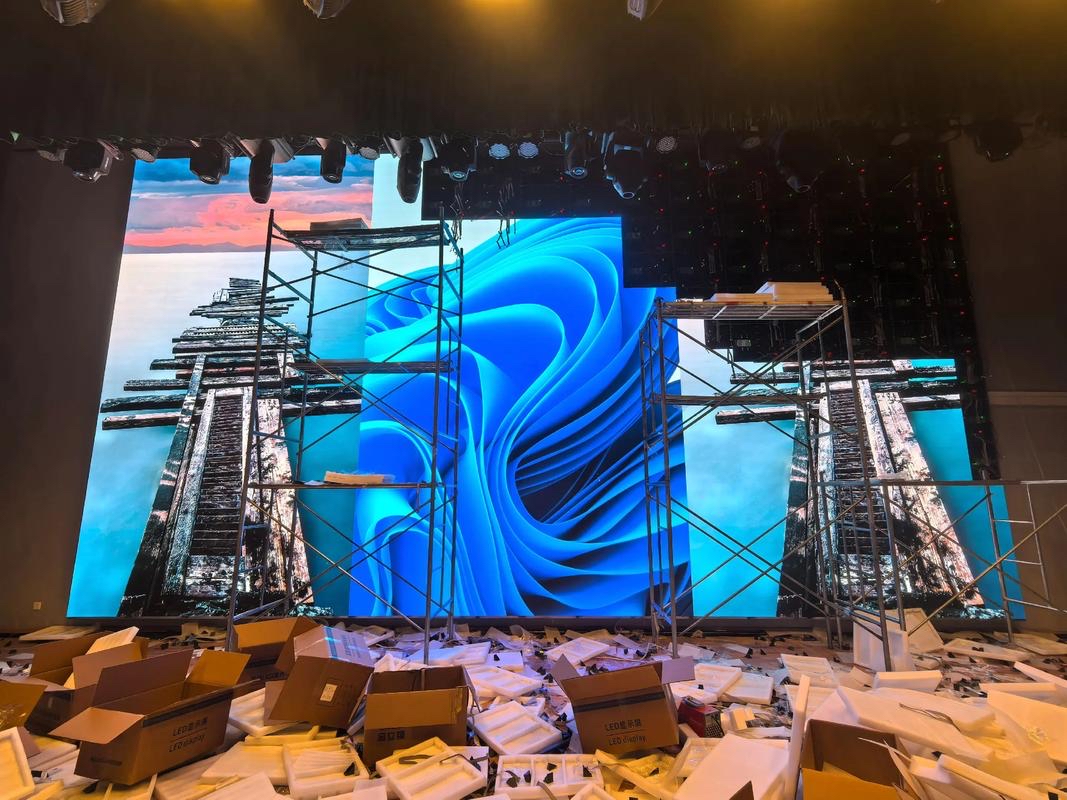
The first consequence is mechanical. Rental cabinets use a rigid die-cast frame with quick-lock connections so panels join and separate in seconds without tools, and so an entire wall can be assembled and struck by a small crew within a load-in window. The frame must hold its geometry after thousands of cycles, because a cabinet that warps slightly will show a visible seam on the wall.
The second consequence is weight and handling. Every kilogram counts when a touring wall is rigged from a truss and lifted by a chain hoist, and it counts again when the truck is loaded at three in the morning. Touring panels are engineered to be light, and the electronics are arranged so that a failure can be fixed on site rather than sent back to a factory.
The third consequence is spares and serviceability. A rental house cannot afford to lose a panel to a minor fault, so modules, power supplies, and receiving cards are all field-replaceable, and a touring kit ships with enough spares to cover the weakest link without carrying a whole second wall.
The 500 x 500 mm cabinet has become the standard building block for stage and event work because its proportions suit both horizontal walls and tall side screens. The X-series cabinet weighs about 6.5 kg, which keeps a truss load manageable and lets a two-person crew handle panels without a lift for most stage heights.
Front and rear maintenance is the feature that earns its keep on tour. A rear-service cabinet lets a technician reach the module and the driver boards from behind the wall, which is the natural route when the screen is hung on a truss with clear space behind it. A front-service cabinet lets the same repair happen from the audience side, which is essential when the wall is closed off behind, as on a ground-stacked backdrop or a wall built against scenery.
Attention to detail shows up in the parts that fail. Cable management clips keep signal and power leads off the floor during load-in, curved locks let straight cabinets form a gentle arc without special modules, and a consistent latching mechanism means crews learn one motion and repeat it hundreds of times in a night. These small features decide how fast a wall goes up when the schedule is tight.
The cabinet also has to survive transport. Corner protection, a snug flight case, and a stackable design that packs flat reduce the damage that accumulates over a touring season, which is the single largest hidden cost in rental inventory.
| Event Type | Recommended Pitch | Brightness | Notes |
|---|---|---|---|
| Concert main stage | P3.9 - P4.8 | 2000 - 3000 nits | Camera-friendly refresh, big canvas |
| Corporate conference | P2.6 - P3.9 | 1200 - 2000 nits | Close audience; text must stay crisp |
| Outdoor festival | P4.8 - P6.9 | 5000 nits or more | Daylight and weather protection needed |
| Theatre and opera | P2.6 - P3.9 | 1200 - 2000 nits | Low glare, quiet operation, fine detail |
| DJ and club | P3.9 | 2000 - 3000 nits | Pulsing content, wide viewing angle |
| Esports arena | P2.6 - P3.9 | 1200 - 2500 nits | High refresh for cameras and streaming |
| Trade show booth | P2.6 - P3.9 | 1200 - 2000 nits | Fast build, tight floor space |
Rigging is where a rental wall becomes an engineering problem rather than a procurement one. A suspended screen transfers its weight, plus the weight of the truss and the rigging hardware, into the roof structure, and every suspension point must be rated for the combined load with a margin. The number of hoists is set by the wall weight and the truss span, not by how many the venue happens to have available.
Curving adds complexity. A curved wall needs cabinets that lock at an angle, and the arc has to be planned so the content is mapped correctly across the curve rather than stretched at the joins. Gentle arcs suit most cabinets with adjustable locks; tighter radius curves may need dedicated curved modules. The viewing angle also changes with the arc, so the designer has to check how the content reads from the sides of the audience, not just from the centre.
Ground stacking is the alternative when overhead rigging is limited. A ground-stacked wall sits on a base frame with ballast or a weighted footer, and the structure must resist tipping as well as support the panel weight. This is common in venues with low ceilings or no rigging points, and it changes the load-in sequence because the base frame is built first.
Wind is the final load that catches people out. Outdoor stages must account for wind pressure on the wall face, which can exceed the panel weight itself on a tall screen. The structure, the ballast, and the weather plan all have to be signed off for the wind speed the site can expect, and the show must be prepared to strike or lower the wall if conditions worsen.
| Rigging Method | Typical Use | Load Consideration |
|---|---|---|
| Truss hang with chain hoists | Concert and arena stages | Roof rating, hoist count, safety margin |
| Ground stack on base frame | Low ceilings, no rigging points | Ballast weight and tipping resistance |
| Wall or scaffold mount | Corporate and theatre sets | Anchor strength and surface condition |
| Curved truss assembly | Immersive stage designs | Adjustable locks and content mapping |
| Mobile LED trailer | Outdoor promotion and sport | Wind load and travel securing |
On tour, the flight cases are as important as the panels inside them. Rental cabinets ship in purpose-built cases that hold a fixed number of panels, stack in a known footprint, and protect the corners that take the most punishment. A pack that fits a standard truck or container without wasting space lowers the cost of every move, and a pack that is easy to count shortens load-out when the crew is tired.
Spares strategy is a business decision disguised as a technical one. Holding a small percentage of modules, plus a spare power supply and receiving card per wall, lets a fault be fixed in minutes on site rather than ending a show. Rental houses that track failure rates by component know exactly which parts to carry and which to leave behind, and that knowledge comes from running the same cabinet model across a whole fleet.
Durability is cumulative. A panel that survives one show proves nothing; a panel that survives two hundred load-ins proves a lot. The connectors, the locking mechanism, and the cable management are the parts that wear, and a cabinet designed for touring uses components rated for many thousands of mating cycles rather than the minimum that a fixed install requires.
Finally, compatibility matters across a fleet. Keeping one cabinet model and one control platform means any panel can go on any wall, spares are shared, and a technician who knows one rig knows them all. Fragmented inventory is the quiet enemy of a rental operation.
Asia Vision Technology builds the X-series rental cabinet at 500 x 500 mm and about 6.5 kg, with front and rear maintenance access and a rigid die-cast frame designed for repeated build and strike. The same platform covers P2.6 and P3.9, so a rental fleet can standardise on one cabinet and share spares across every wall it owns.
Panels carry CE, FCC, and RoHS certification, reach refresh rates of 3840 Hz or higher indoors, and are rated for 100,000 hours. We cover the full range from P0.9 to P20 and ship production orders in 15 to 20 working days with a 3-year standard warranty.
For this requirement our range covers it directly: the RH-PRO fine-pitch COB (flagship, full redundancy) and the COB CV-PRO series (Ultra-HD fine pitch).
Related reading: Event and rental LED screens in Australia
Related reading: UK LED Display & Rental Screen Market 2026: London, Manchester — UKCA