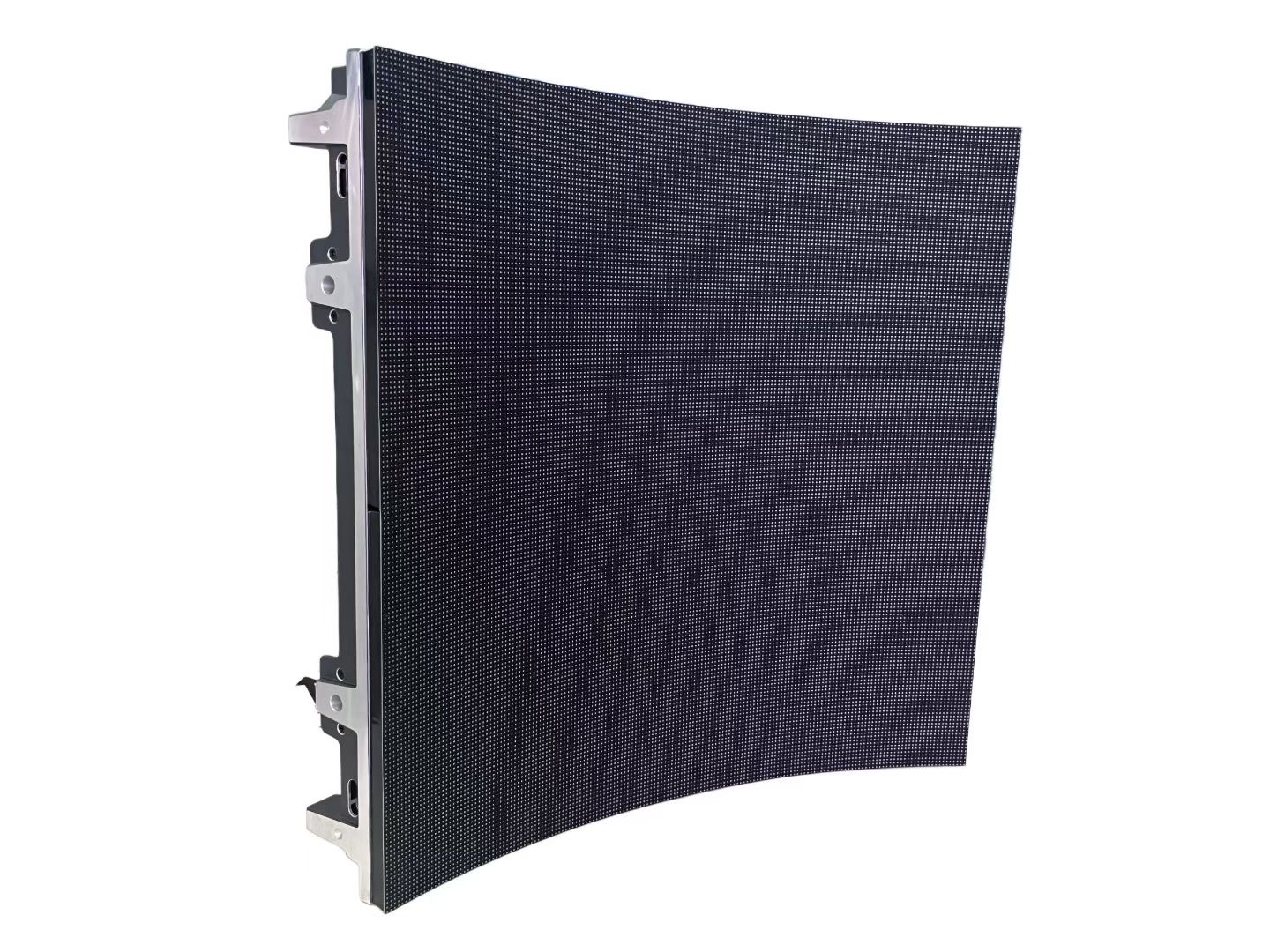
A sports venue LED display is judged by a different standard than an advertising screen. A roadside billboard succeeds if it looks vivid from a passing car. A stadium screen succeeds only when a referee on the field, a spectator in row 40, and a broadcast camera fifty meters away all read the same number at the same instant. That three-way requirement drives every specification decision on the project.
Scoreboards must stay legible in direct sunlight, resist the strobing that ruins slow-motion replays, and update a game clock without visible lag. Perimeter and ribbon boards face the opposite problem: they sit at eye level behind players, so they must register clearly on camera without flaring into the lens or distracting the athletes standing directly in front of them.
Venues also run on a fixed calendar. A football stadium cannot close for a two-week screen upgrade in the middle of a season, and a multi-purpose arena may host basketball, ice hockey, and a concert within the same week. Maintenance access, cabinet weight, and control-system flexibility end up mattering as much as raw image quality, because one screen has to serve several sports without a rebuild between events.
Finally, sports LED is a safety and revenue asset at the same time. The same surface carries the score, the sponsor loop, the instant replay, and the emergency message. Buyers who plan for all four roles from the start avoid the common mistake of installing a beautiful scoreboard that cannot be repurposed for sponsorship or crowd messaging.
The phrase stadium screen hides four distinct products, each with its own geometry and technical brief. Specifying them separately is the fastest way to control cost and to make sure every surface does its job.
Main scoreboard. Usually a large-format screen or a cluster of screens hung at one or both ends of the pitch. It carries the score, the clock, player statistics, and instant replay. Pitch is typically P6 to P10, because the nearest spectator still sits fifteen to forty meters away and the content is mostly large numerals and video rather than fine text.
Perimeter LED. The low boards that ring the field at roughly 0.8 to 1 meter high. These exist mainly for broadcast sponsorship, so they are specified for camera performance rather than for the crowd. Pitch around P10 to P20 is normal, and panel height is chosen so the boards do not block the first rows of seating.
Ribbon boards. Long, narrow strips mounted on the fascias between seating tiers. They show rolling text, scores from other games, and sponsor rotation. Because they are seen at a sharp angle, wide viewing angle and uniform colour along the whole strip matter more than peak brightness.
Hospitality, concourse and entry screens. The smallest and most numerous category. These sit closer to retail digital signage, at P2.5 to P4, and they are usually the cheapest place to start if a venue wants to test the water before committing to a full scoreboard rebuild.
| Screen Zone | Typical Pitch | Brightness | Viewing Distance | Primary Role |
|---|---|---|---|---|
| Main scoreboard | P6 - P10 | 5000 - 8000 nits | 15 - 60 m | Score, clock, replay |
| Perimeter LED | P10 - P20 | 5000 - 7000 nits | Camera and first rows | Broadcast sponsorship |
| Ribbon board | P4 - P8 | 4000 - 6000 nits | 5 - 30 m | Rolling text, other scores |
| Concourse and hospitality | P2.5 - P4 | 800 - 1500 nits | 2 - 8 m | Wayfinding, hospitality |
| Entry and facade | P4 - P8 | 5000 - 8000 nits | 10 - 40 m | Ticketing, brand, promotion |
Refresh rate is the single specification that separates a venue screen from a wall of the same size in a shopping centre. A camera does not capture a continuous image; it samples the screen in short slices. If the LED refresh rate sits close to the camera shutter speed, horizontal bands roll across the picture on the broadcast feed even though the screen looks perfect to the naked eye.
For indoor arenas we specify at least 3840 Hz, and for outdoor venues at least 1920 Hz, treating those numbers as a floor rather than a target. Where several cameras shoot the same screen at different shutter angles, a higher refresh rate gives the broadcast engineer more room to find an angle that is clean for all of them. Genlock, which locks the screen timing to the house reference signal, removes the last source of drift between the display and the production switcher.
The second camera problem is moire. On a fine-pitch screen the regular grid of LED pixels can beat against the regular grid of the camera sensor and produce a shimmering pattern over the picture. This gets worse as pitch gets finer, which is why a P10 perimeter board is often easier on camera than a P2.6 concourse wall. A high fill factor and a matte, low-glare surface treatment suppress the effect, and a slight defocus on the camera side handles what remains.
Grayscale depth matters just as much under stadium lighting. A screen with low bit-depth processing bands badly across a dark sky or a shadowed stand, and that banding is more visible on camera than in the stadium. Fourteen-bit or higher processing keeps gradients smooth across the whole brightness range, which is what makes a replay look like television rather than a computer monitor.
| Sport | Key Requirement | Notes |
|---|---|---|
| Football and soccer | P10 perimeter boards, genlock | Sponsor rotation synced to the match clock |
| Basketball | P4 - P6 centre-hung screen | 360-degree viewing with no blind angle |
| Ice hockey | High brightness, low glare | White ice reflects light; control screen spill |
| Cricket | Fine text at long range, high contrast | Scorecards and statistics need crisp numerals |
| Motorsport | Very high brightness | Direct sunlight and long throw distances |
| Tennis and multi-use halls | Fast refresh, quiet operation | Fanless drive preferred close to the court |
A stadium screen is a building attachment with a public-safety role, so wind load and seismic restraint usually govern the steel design. A centre-hung arena scoreboard hangs from the roof structure and must be analysed as a suspended mass that sways during a concert; a perimeter board sits on the ground or on a low plinth and must survive being struck by players, balls, and ground staff. A structural engineer should sign off on the frame, the anchor points, and every penetration into the building.
Outdoor venues need genuine weather protection. Cabinets should carry IP65 front and rear, with sealed signal paths and drainage for condensation. In coastal or high-humidity markets, add conformal coating on the driver boards and stainless fasteners, because salt air attacks the parts that are hardest to reach. Thermal design follows the same logic: a scoreboard often runs near full brightness for hours in the middle of summer, so rear plenums and derating sensors protect both the LEDs and the power supplies.
Control room integration is where venue projects are won or lost. The screen must accept feeds from the timing system, the replay server, the sponsorship playlist, and the public-address or emergency system, and it must switch between them without a visible glitch. That usually means a media server or a switcher with preset scenes rather than a bare video processor, plus a redundancy path so a failed source does not blank the match clock.
Service access has to be designed in. Front-serviceable cabinets let a technician pull a module from the face of the screen, which suits boards mounted tight against a stand. Rear-serviceable cabinets need a walkable plenum behind the display. On a centre-hung scoreboard, plan a lift or catwalk route because the power and control cabinets are the parts most likely to need attention during a season.
Asia Vision Technology builds venue-grade LED displays rated IP65 for outdoor use with brightness above 8000 nits on the D-PRO line, and holds CE, FCC, and RoHS certification for export markets. Indoor arena and concourse screens use the CV-PRO COB series, which reaches a 10000:1 contrast ratio and refresh rates of 3840 Hz or higher for clean camera work.
For sports projects we share cabinet load data and refresh specifications early so the structural and broadcast engineers can lock their designs before fabrication. All panels use the X-series 500 x 500 mm rental cabinets where a venue needs to reconfigure screens between events. Orders ship in 15 to 20 working days with a 3-year standard warranty.
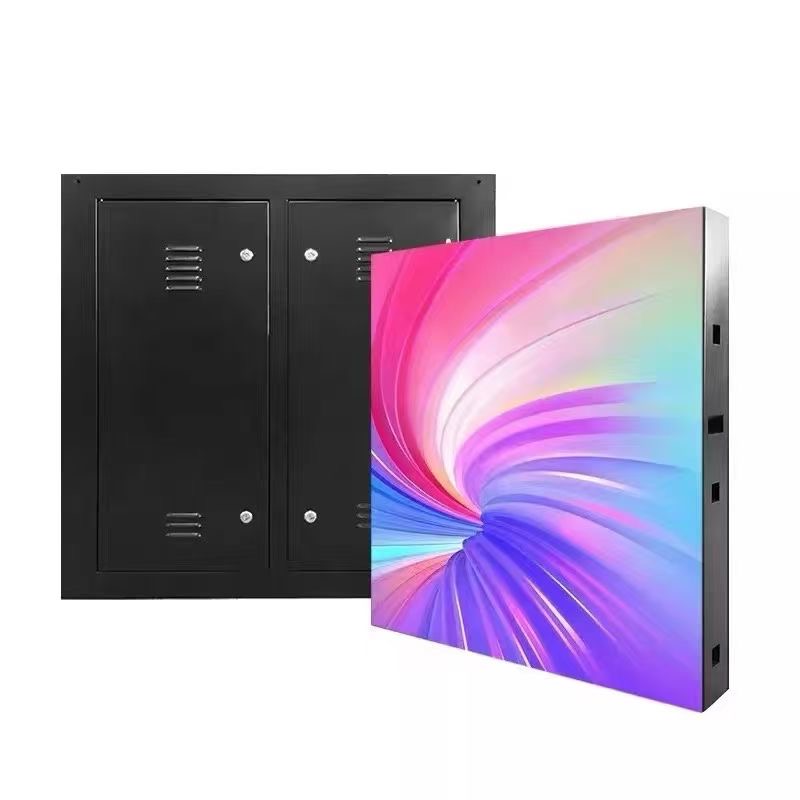
For this requirement our range covers it directly: the RH-PRO fine-pitch COB (flagship, full redundancy) and the COB CV-PRO series (Ultra-HD fine pitch).
Related reading: Outdoor Rental LED Guide 2026: Panels Built for Touring