By David
When do you need an LED display custom cabinet? An LED display custom cabinet is a non-standard enclosure made to fit a specific size, shape, or mounting requirement. Standard cabinets cover most projects, but curved walls, unusual openings, and structural constraints often need a bespoke design. This 2026 guide explains when to go custom and what it costs.
Standard LED cabinets come in a small number of sizes, most commonly 500 by 500 millimetres or 500 by 1000 millimetres. Most rectangular screens can be built from these. But when the screen must fit an exact opening, follow a curve, or meet a structural constraint, a standard cabinet may not do the job.
This guide is written for project buyers who need a screen that does not fit the standard grid. It covers when a custom cabinet is justified, the tooling and lead-time implications, and how to order so the result matches the design.
A custom cabinet is justified when the screen must fit a constraint that standard sizes cannot satisfy. An exact architectural opening, a curved facade, an unusual aspect ratio, or a mounting position with limited depth are all reasons to go custom. A screen that does not fit looks unfinished or needs costly building work.
| Requirement | Standard Cabinet | Custom Cabinet |
|---|---|---|
| Rectangular screen | Usually fine | Rarely needed |
| Exact opening size | May leave gaps | Fits precisely |
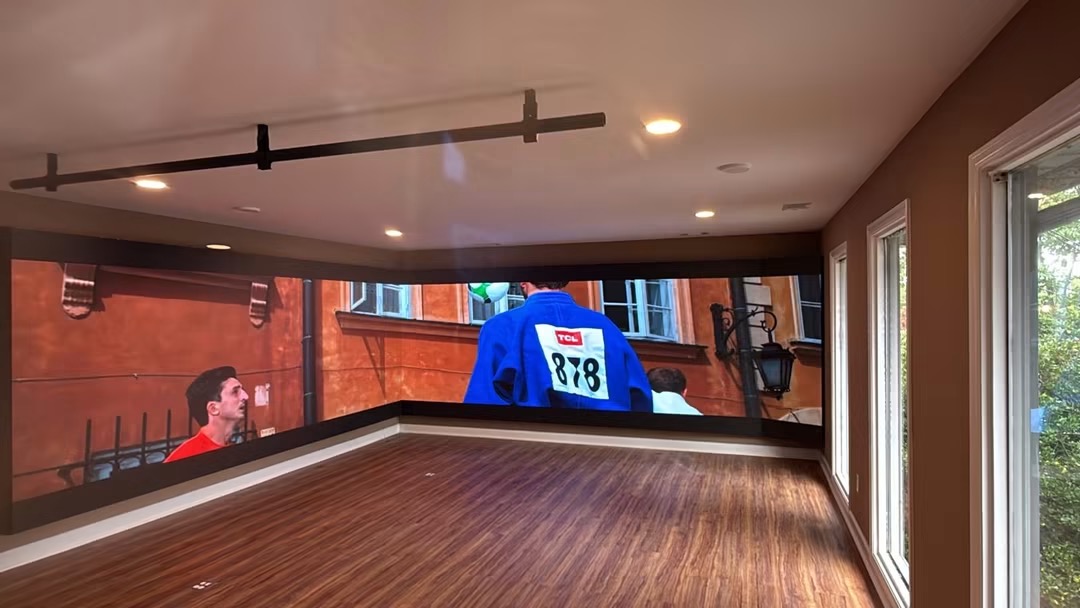
| Curved facade | Limited curve | Made to the radius |
| Shallow mounting depth | May not fit | Made to fit |
| Unusual aspect ratio | Approximate | Exact |
The decision should be driven by the site, not by preference. A custom cabinet that fits a difficult opening can be the difference between a screen that looks built-in and one that looks added on. But if a standard cabinet can do the job, custom adds cost and time for no benefit.
Standard cabinets lock the screen to a grid based on the cabinet size and the pixel pitch. A screen that must fill an opening between two columns may need a cabinet size that divides the opening exactly. Custom sizes let the screen match the architecture rather than the architecture matching the screen.
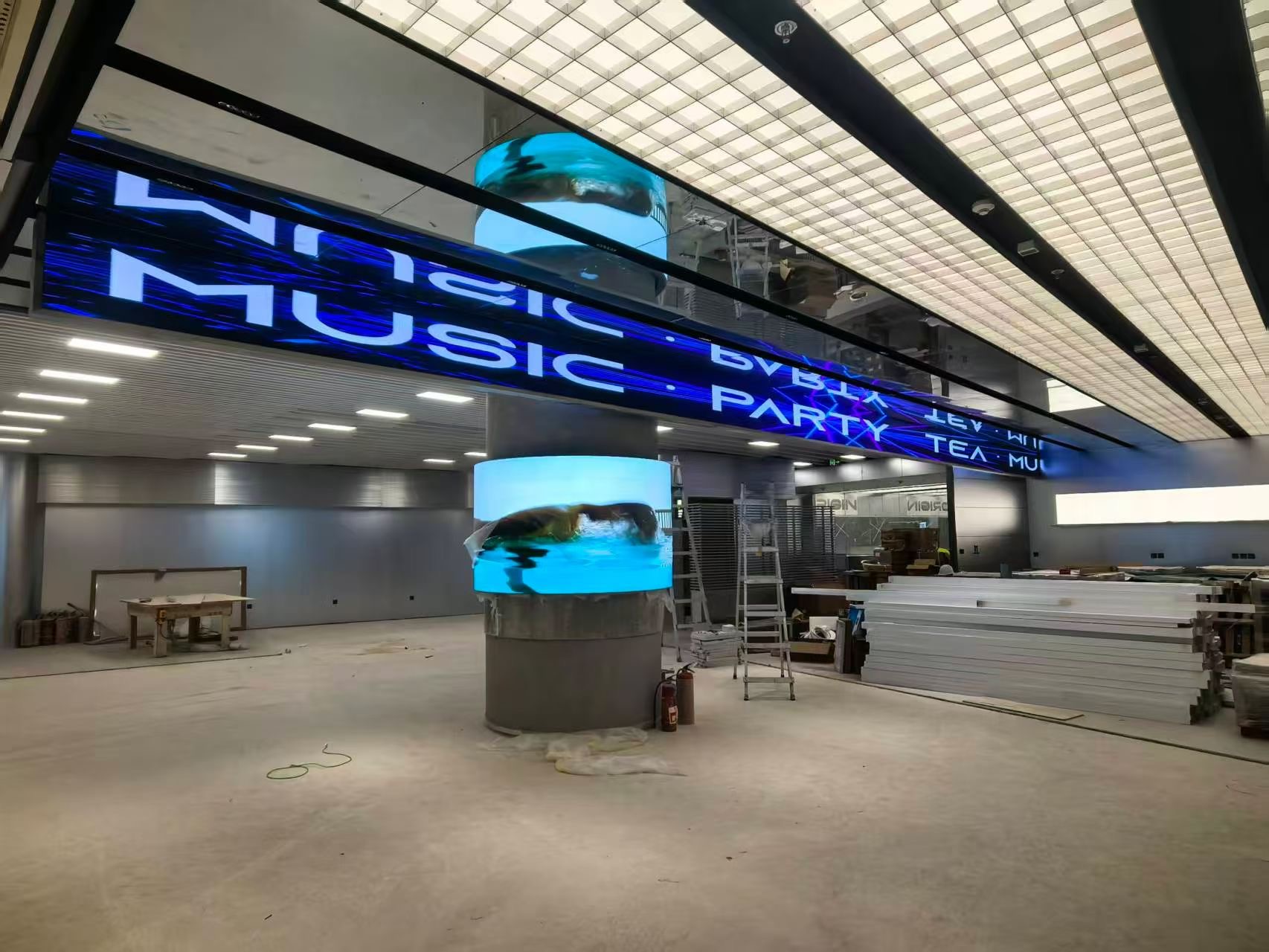
Custom sizes also allow unusual aspect ratios, such as a long, thin ribbon screen or a tall, narrow pillar screen. These would be inefficient to build from standard cabinets, because of wasted space or visible seams. A custom cabinet produces a clean, purpose-built result.
Curved screens follow a facade or a viewing arc, and the cabinets are made to a specific radius. Shaped screens follow a non-rectangular outline, such as a logo or an arch. Both require tooling that is specific to the project, and both must be made with precision so the modules align.
Curve radius is a critical dimension. A radius that is too tight stresses the modules and the frame, while one that is too shallow misses the design intent. Provide the exact radius and, where possible, a site survey so the factory can confirm the design before tooling is cut.
Custom cabinets require tooling, the moulds or fixtures used to make the specific case and frame. Tooling is a one-time cost charged to the project, and it can be significant. The lead time is also longer than for standard cabinets, because of the design, tooling, and production steps.
| Factor | Standard | Custom |
|---|---|---|
| Unit cost | Lower | Higher |
| Tooling | None | One-time project cost |
| Lead time | Shorter | Longer |
| Minimum order | Low | Often higher |
| Future spares | Standard, easy | Must be stocked with the batch |
The tooling cost is justified by the volume of the project or by the value of a perfect fit. For a single custom screen, tooling may be a large share of the cost. For a large project with many identical custom cabinets, the tooling is spread across the units and becomes modest.
Custom cabinets create a spares problem. A standard cabinet can be reordered at any time; a custom one may only be made once, with the project's tooling. If a custom cabinet is damaged and no spare exists, replacing it can mean re-cutting the tooling, which is slow and expensive.
Order spare custom cabinets and modules with the original batch. A small number of spare cabinets, held on site, protects the project against damage and against the day the tooling is no longer available. This is the most important difference between custom and standard in the long run.
A custom cabinet still uses standard LED modules, cut to fit the cabinet's dimensions. The module count and pixel arrangement must be planned so the screen's resolution is correct and the content maps cleanly. A custom cabinet that leaves a partial module at the edge can complicate the content and the calibration.
Work with the supplier to plan the module layout inside the custom cabinet. The goal is a screen whose pixel grid matches the content resolution, with no awkward partial modules. This planning happens before tooling, because changing it later is expensive.
For a significant custom project, approve a drawing, and where possible a prototype, before full production. A drawing confirms the dimensions and the shape; a prototype confirms the fit and the finish. Catching a design error at the prototype stage is far cheaper than after a full production run.
Photograph and measure the prototype as if it were the finished cabinet. Check the fit against the site dimensions, the module alignment, and the mounting points. Only when the prototype matches the design should the full run begin.
A custom cabinet is often visible, so its finish matters as much as its dimensions. The colour, texture, and edge treatment should match the installation's design intent. A cabinet in the wrong colour can spoil an otherwise perfect screen, especially in a high-end interior.
| Finish Aspect | Options | Consideration |
|---|---|---|
| Cabinet colour | Black, grey, custom | Match the room or structure |
| Surface | Matte, textured | Reduce reflection |
| Edges | Standard, flush | Flush for fine pitch |
| Front bezel | None, slim | Seamless look preferred |
Provide the finish specification with the drawings, including a colour reference where exact matching matters. A factory that is given only dimensions will produce a functional cabinet that may not match the design. The finish is part of the custom order, not an afterthought.
Custom cabinets add design, tooling, and production time to the schedule. A project that allows only the standard lead time will be late. Build the extra time into the plan and confirm each stage with the factory, from drawing approval to tooling to first article.
Ask the factory for a stage-by-stage schedule with approval points. You approve the drawing, then the tooling begins, then the prototype, then the full run. Each stage should be confirmed before the next, so a design problem is caught early rather than at the end of production. Late changes to a custom cabinet are expensive, because the tooling is already cut.
Write the custom requirement with the exact dimensions, the shape or curve, the module layout, the finish, and the mounting points. State the tooling cost, the lead time, and the spare-cabinet quantity. Require a drawing for approval before production.
LED display custom cabinet work turns a screen into a built-in part of the architecture, but it demands more planning and a longer lead time than a standard order. Buyers who confirm the need, plan the module layout, approve the design, and stock spares get a screen that fits perfectly and stays serviceable for its whole life.
Keep the tooling drawings and the cabinet specification with the project file. If a spare cabinet is needed years later, the drawings show exactly how it was made, even if the original tooling is gone. Documentation is what keeps a custom installation repairable long after the original order is forgotten, and it costs nothing to keep.
Send us your exact dimensions and site drawing, and we will quote the custom cabinet, tooling, and lead time.
Request Custom QuoteChat on WhatsApp