By David
"Custom" is the most overused word in LED sales. It can mean a genuinely new cabinet designed around an architect's opening, or it can mean a standard panel with a different sticker on the controller. Both get called custom, and the price difference between them is large — which is why a buyer should establish which one is being quoted before comparing offers.
This page sets out what a factory can actually customise, what each layer costs in time and money, and how to tell a real custom project from a re-badged standard one.
Custom work is not one thing. In practice it falls into four areas, and they carry very different implications.
| Layer | What changes | Cost and lead-time impact |
|---|---|---|
| Cabinet dimensions | A new enclosure size to fit a specific opening | Highest — design, tooling, prototype and verification |
| Pixel pitch | A different module inside an existing cabinet | Moderate — a module change, not a new enclosure |
| Shape | Curved, cornered or irregular geometry | Depends on whether the cabinet already supports the curve |
| Finish and housing | Colour, cladding, integration with the surrounding finish | Lower — cosmetic and coordination, not structural |
Most projects need one or two of these, not all four. A quotation that treats everything as fully custom is either over-engineering the job or hiding a standard product behind the word.
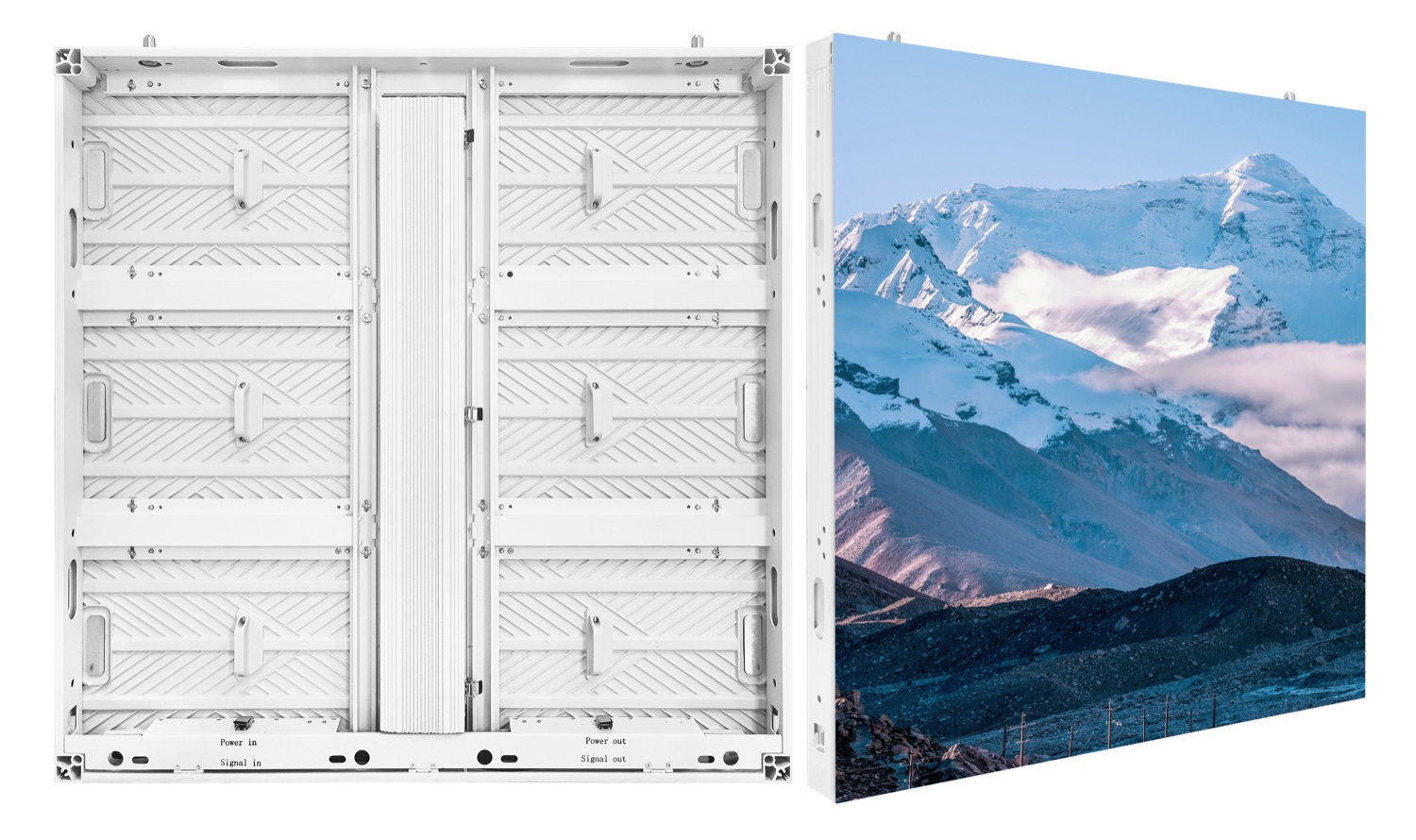
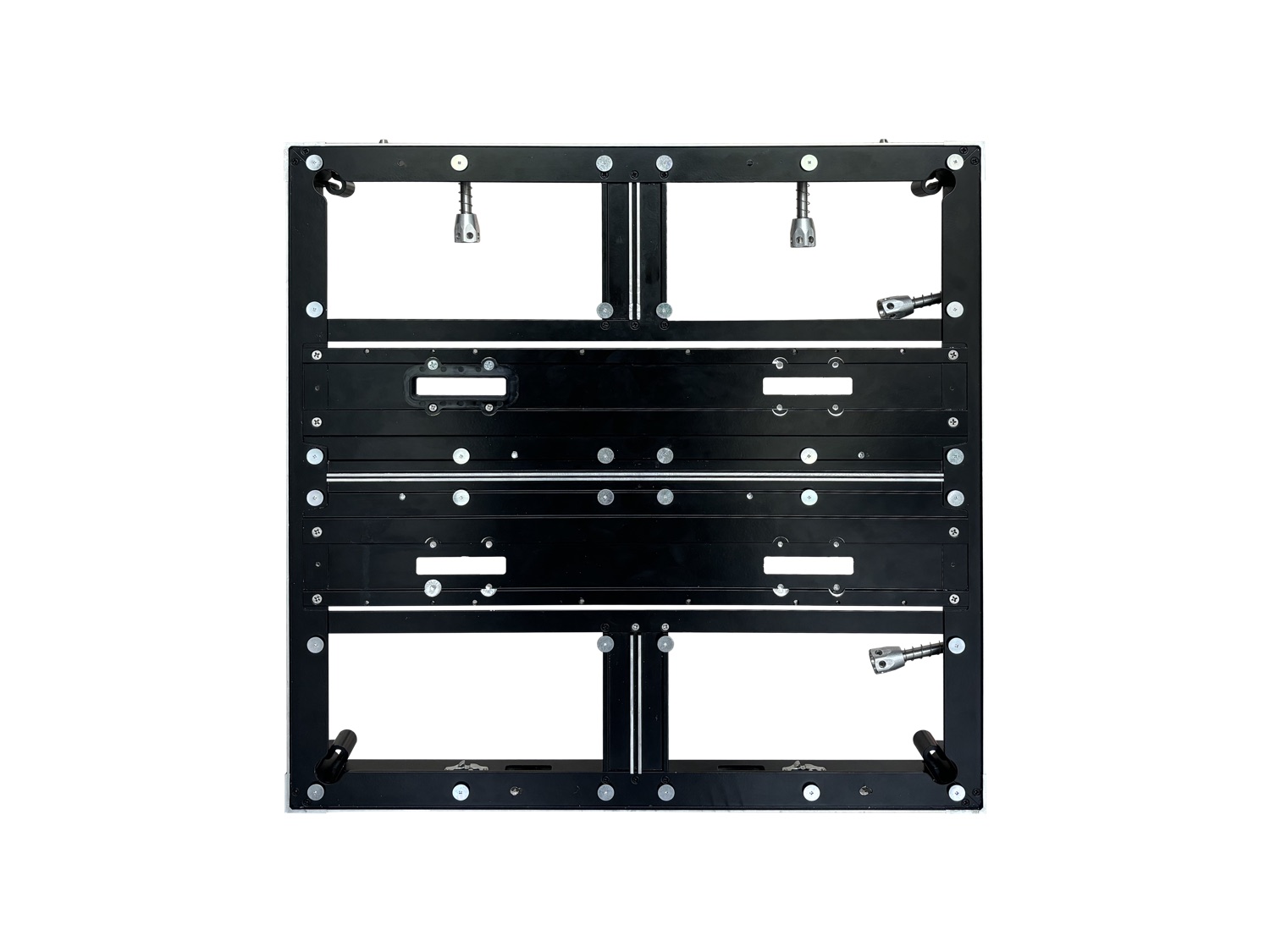
A different cabinet size is the deepest form of customisation. It means new drawings, a prototype, a structural review of how the panel carries load, and a test of how the modules sit in the new frame.
This is where the real cost sits, and it is a cost that does not disappear when only one unit is ordered. A custom cabinet has to be designed and verified whether the order is one screen or fifty, which is why small custom projects look expensive per square metre and large ones look reasonable.
The credible way to quote this is to supply dimensioned drawings and a prototype before production, so the buyer can check the opening, the mounting and the finish against the real room. A quote without those documents is a promise rather than a specification.
Changing the module inside an existing enclosure is a much lighter form of customisation, and it is often what a project actually needs.
Where a product family shares a cabinet platform across several pitches — our COB EF series, for example, takes P1.5625 and P1.953 modules in the same 500×500mm frame — the buyer can match the pitch to the viewing distance without a new enclosure. The cabinet, the mounting and the service method stay the same; only the module changes.
Curved, cornered and irregular walls sit between the two extremes. Where the standard cabinet already supports the geometry — a rental cabinet that curves to ±5°, for example — no new tooling is needed and the project is close to standard.
Where the shape falls outside the cabinet's mechanical limits, the enclosure has to be designed around it, and the project moves into layer-one territory. The dividing line is the cabinet's rated curve, not the designer's intention, so it is worth establishing early rather than at approval stage.
The outermost layer is appearance: cladding, colour, how the screen meets the surrounding wall, and whether the enclosure is visible or concealed.
This is where coordination matters more than tooling. A recessed screen needs a reveal detail agreed with the interior contractor; a flush wall needs the substrate and the screen depth settled together. Getting these wrong does not break the display, but it does leave a visibly unresolved junction that the client will notice for the life of the installation.
A custom LED project has a sequence, and skipping it is what turns a custom order into a dispute.
Brief and drawings. The opening, the viewing distances and the finish are captured and turned into dimensioned drawings. Prototype or sample. Where a new cabinet is involved, a unit is built and checked against the drawings. Written test criteria. The buyer and factory agree what "pass" means before production. Production and inspection. The batch is checked against those criteria before shipping. Delivery and commissioning. The screen is installed and verified on site.
Each step produces a document. A project with documents can be managed; a project without them depends on goodwill.
Honesty about limits is part of the service, because a promise that cannot be kept costs more than a refusal.
Some things cannot be made custom at reasonable cost or in a reasonable time: a cabinet that would not carry its own load, a pitch that no supplier produces, a curve that exceeds the mechanical limit of the module, or a finish that conflicts with the sealing the screen needs. In each case the right answer is to change the design, not to accept an order that cannot be delivered.
Asia Vision Technology is based in Shenzhen and runs 8 IC production lines and 7 LED SMT production lines under ISO 9001:2015, with CE, FCC and RoHS certification. Custom projects are quoted with dimensioned drawings, and cabinets are supplied to the agreed design with a 15 to 20 working day production lead time once the design is approved. The 3-year warranty applies to the delivered product.
For projects that only need a different pitch or finish, our standard series covers most of the range — COB CV-PRO for fine-pitch interiors, X Series for a shared cabinet across COB, SMD and GOB, and D-PRO for outdoor fixed work. The custom route exists for the cases those cannot cover.
Related reading: custom cabinet guide, cabinet manufacturing process, and OEM vs ODM.
Send your specifications for a detailed LED display price quote with UL/ETL certification.
Request Price Quote Chat on WhatsApp