The Netherlands is small in area but outsized in trade, and that combination makes it an efficient market for LED displays. This guide covers what is driving Dutch demand, the certification a shipment needs, how goods move through Rotterdam and the other gateways, and which Asia Vision lines suit the projects being specified.
Dutch demand for LED displays is driven first by events and live production. Amsterdam hosts large electronic music gatherings, conferences, and broadcast productions, while Rotterdam, Utrecht, and Eindhoven run their own festival and trade-show calendars. The country is compact, so a single rental fleet can serve several cities in a week, which rewards cabinets that build fast and travel well.
The trade and exhibition sector is the second driver. Amsterdam RAI, the Utrecht exhibition halls, and the Rotterdam and Eindhoven venues host international fairs across technology, horticulture, logistics, and design. These shows need high-brightness rental screens for halls with strong ambient light and fine-pitch panels for stand displays where visitors stand close and photograph the product.
Retail, hospitality, and transport add a permanent layer of demand. Dutch retailers are early adopters of digital signage, Schiphol and the rail network deploy information screens at scale, and supermarkets and city centres use LED for advertising and wayfinding. Because these installations run long hours, Dutch buyers typically weight rated lifetime, remote management, and serviceability heavily.
Finally, the Netherlands is a logistics and data hub, and that shapes the supplier conversation. Dutch importers understand freight, customs, and bonded movement better than most, so they expect a manufacturer to arrive with clean documentation, accurate dimensions, and a realistic transit plan rather than a vague delivery promise. That emphasis on operational precision is one of the defining features of the Dutch market.
There is also a notable sustainability angle. Dutch corporate and public buyers increasingly ask about energy use, rated lifetime, and the ability to repair rather than replace, because environmental reporting is taken seriously in the region. A supplier who can supply power draw at a defined brightness, a long rated lifetime, and a module-level service procedure answers that concern directly, and it is often the difference between a shortlist and a rejection.
The Netherlands applies the European Union framework, so CE marking is the mandatory legal requirement backed by a declaration of conformity and test reports. Dutch buyers occasionally ask about the voluntary KEMA-KEUR mark for electrical products, and shipping through Dutch ports also means the goods must satisfy normal EU customs and substance rules. The table below summarises what to prepare.
| Item | Market | What It Covers | Buyer Action |
|---|---|---|---|
| CE marking | Netherlands and the EU | Low Voltage, EMC, Radio and RoHS directives | Keep the declaration and reports with the goods |
| KEMA-KEUR | Netherlands | Voluntary Dutch electrical safety mark | Add only if a client or tender names it |
| RoHS report | Netherlands and the EU | Restricted substances in modules and plastics | Request a material-level test report |
| EN 55032 and EN 55035 | Netherlands and the EU | EMC emission and immunity standards | Confirm it names the shipped product family |
| Ecodesign and ErP | Netherlands and the EU | Energy and standby power requirements | Ask for power draw at a defined brightness |
| Nameplate and label | Netherlands | 230 V 50 Hz rating matching the declaration | Check artwork before the container leaves |
The Netherlands is one of the easiest European markets to reach because Rotterdam is the continent's largest port and the country is built around freight. Most Dutch shipments clear quickly, and onward road or rail delivery to almost any destination in the country takes a day. Because the country is so well connected, Dutch buyers often measure a supplier by documentation quality and delivery reliability rather than by the small differences in transit time between routes.
| Route | How It Works | Typical Transit | Best For |
|---|---|---|---|
| Sea via Rotterdam | Direct deep-sea service from South China | 28 to 36 days port to port | Full containers for nationwide delivery |
| Sea via Amsterdam | Smaller port with direct berths and short inland legs | 30 to 38 days port to port | Regional and northern projects |
| Sea via Antwerp then road | Belgian gateway with a short bonded road leg | 30 to 40 days door to door | Projects near the southern border |
| China-Europe rail | Block train to Duisburg or Tilburg, then road | 22 to 30 days | Mid-size orders on a tight schedule |
| Air freight | Shenzhen to Amsterdam Schiphol | 5 to 8 days | Spare modules and urgent kits |
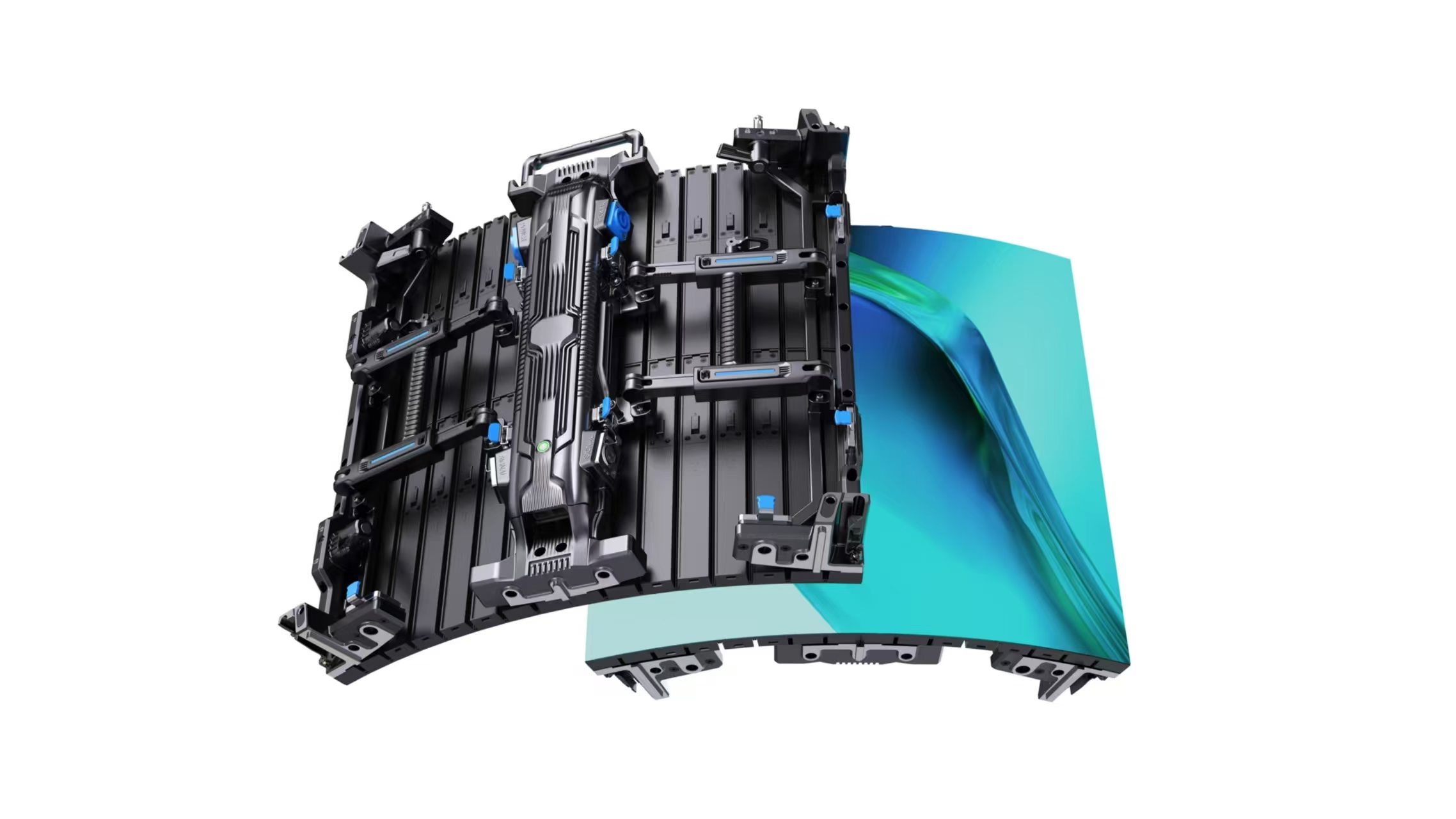
For event and exhibition work the X series rental platform suits the Dutch market well. Its 500 by 500 millimetre cabinets weigh 6.5 kilograms and support front and rear service, so a stage can be assembled against a wall or a set piece and still be maintained. At P2.6 and P3.9 the pitch covers hall screens and stage backdrops, and the quick-lock frame keeps changeover time short during a busy show week.
For permanent indoor installations the CV-PRO COB line fits retail, corporate, and control-room projects. The chip-on-board surface reaches around 10000:1 contrast and hides the lamp gap at close range, so a shop window or reception wall reads as a continuous image rather than a grid of dots. Refresh rates of 3840 Hz and above keep the image stable under cameras, which matters in broadcast-linked and press-facing spaces.
Outdoor and semi-outdoor work is served by the D-PRO range, rated IP65 with brightness above 8000 nits for facades, transport signage, and festival screens. Dutch weather is wet and changeable, so weather sealing and reliable thermal management matter more here than in drier markets, and the deep dimming range keeps evening operation comfortable and neighbour-friendly.
Because the pitch range spans P0.9 to P20, each Dutch surface can be matched to its own viewing distance. A station concourse screen seen from several metres and a shop window seen from one metre are different products, and specifying them separately is where most of the achievable value in a Dutch project sits.
It is also worth separating temporary and permanent needs in a Dutch project. A trade-fair stand needs rental cabinets that build in hours and can be reused at the next show, while the same brand may want a permanent wall in its headquarters that is calibrated once and then left to run. Mixing the two requirements into one order usually leads to over-specifying the rental units or under-specifying the permanent wall, so we prefer to treat them as two specifications that share a control platform.
Asia Vision Technology manufactures indoor COB, rental, and outdoor LED displays at our Shenzhen facility and holds CE, FCC, and RoHS certification for export markets. Our pixel pitch range runs from P0.9 to P20, our CV-PRO indoor COB panels deliver 10000:1 contrast with refresh rates of 3840 Hz and above, our X series rental cabinets measure 500 by 500 millimetres at 6.5 kilograms, and our D-PRO outdoor range carries IP65 protection with brightness above 8000 nits.
Dutch importers tend to value precision, so we work the same way: we confirm the destination market and project constraints before the order is fixed, supply accurate cabinet dimensions for installers and stand builders, and issue compliance documents against the product family that actually ships. Orders are produced in 15 to 20 working days with a 3-year standard warranty.
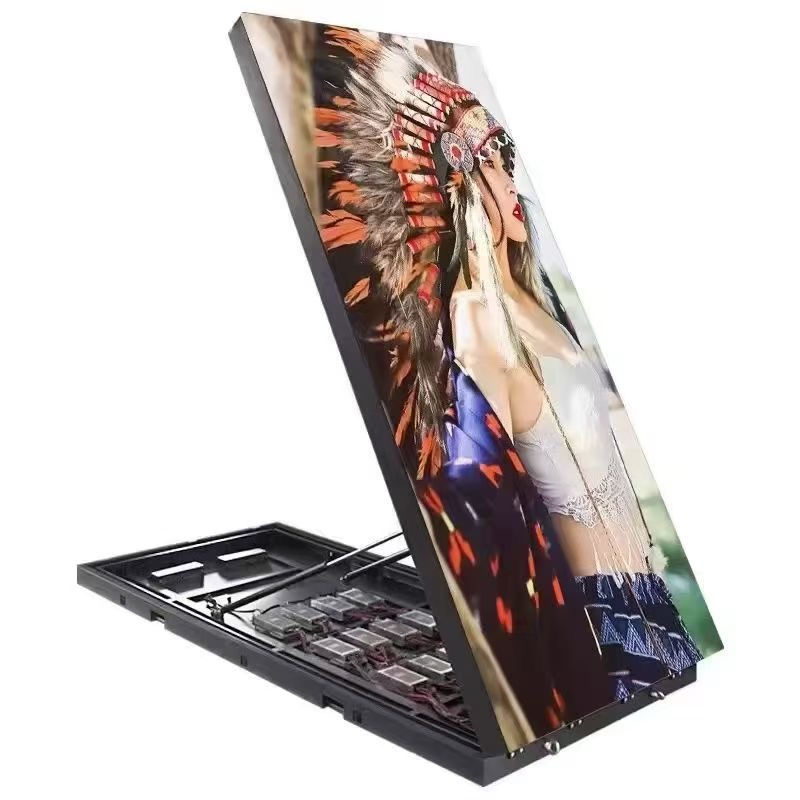
For this requirement our range covers it directly: the COB Z rental series (7680Hz flip-chip) and the COB ZH touring series (sealed, wind-rated).
Related reading: Event and rental LED screens in US