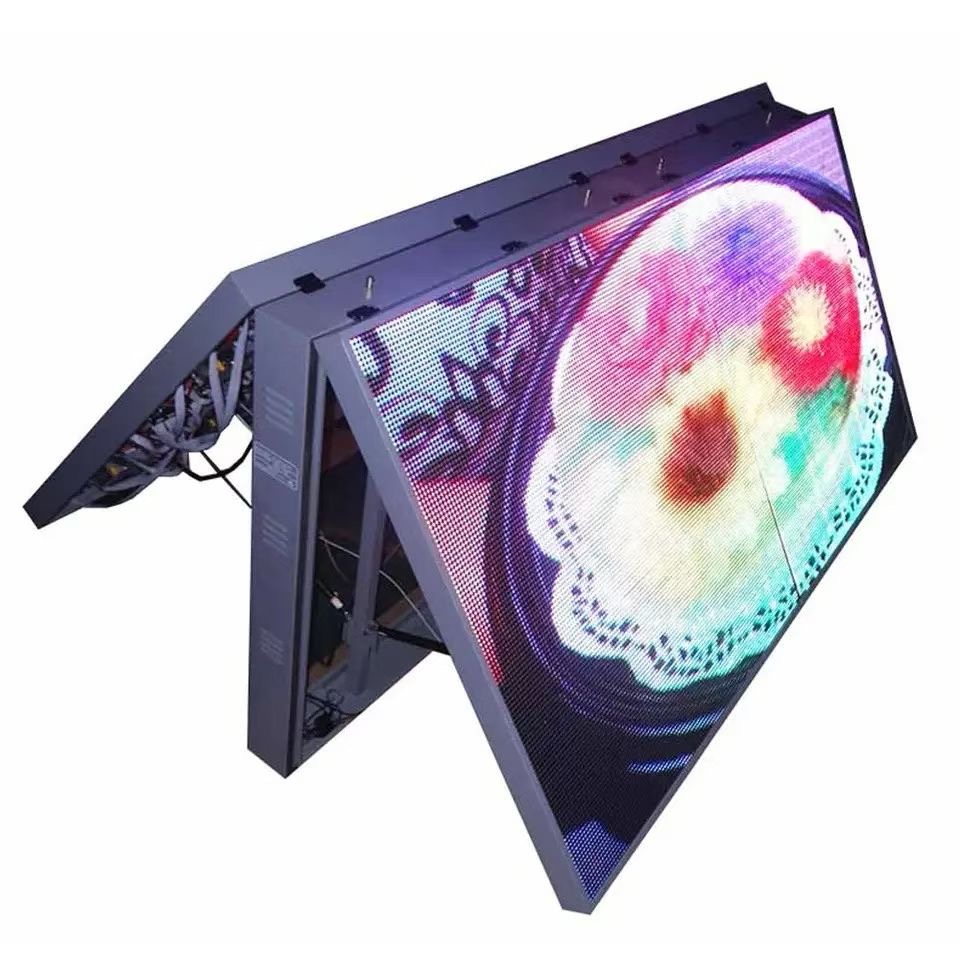
By Cassie
A large LED display is a structure as much as it is an electronic product, and the installation is where the two disciplines meet. The panel specification may be flawless, but if the mounting frame is not fixed to something load-bearing, if the electrical feed cannot carry the inrush, or if the wall is handed over without calibration, the screen will never look like the demo that sold it.
Installation quality also determines the cost of everything that follows. A wall that was mounted so that modules can be serviced from the front is a wall that costs a technician an hour to maintain; one that requires the screen to come down for a single fault costs days. This guide covers the considerations that decide an installation, the practices that keep it predictable, and the specification and support arrangements that accompany a professional fit-out.
The first consideration is the structure the screen will hang from, and this is a question for an engineer rather than for an installer. A video wall presents a combination of dead weight, wind load if it is exposed, and dynamic load that varies with temperature and, on a large facade, with the movement of the building itself. The mounting frame has to transfer those loads into a structure that was designed to receive them, which may mean a steel sub-frame rather than a direct fix to a wall. Settling this at the design stage is what prevents a screen from being installed on a facade that was never assessed for it.
The second consideration is access, in both directions. Installation access determines how the cabinets get to the mounting position, which on an upper facade may require a crane or a suspended platform and the permits they need. Service access determines how the screen is maintained for the rest of its life, and the decision between front and rear service is made before the wall goes up rather than after. For any screen mounted flush to a structure, front service is effectively mandatory, because the rear void that a rear-access design assumes does not exist.
The third consideration is power and signal provision, which should be completed and tested before the cabinets arrive. The electrical design has to account for the peak load of the wall, the protective device rating, the inrush current at switch-on and the routing of the DC distribution. Signal provision has to respect the distance limits of the protocol and the number of data outputs the wall requires. Commissioning an installation where the feed was sized from an estimate rather than from the cabinet datasheet is the most common cause of a delayed handover.
The fourth consideration is the operating environment over the life of the screen. An outdoor wall faces temperature cycling, water ingress at every fixing point and the UV degradation of anything not rated for exterior use, while an indoor wall in a public space faces accidental impact and cleaning that may involve chemicals. The table below sets out the assessment points that should be resolved before a project is scheduled.
| Assessment Point | Why It Decides the Install | Resolution |
|---|---|---|
| Structural capacity | Must carry dead, wind and dynamic load | Engineer assessment of sub-frame and fixings |
| Installation access | Determines plant, permits and schedule | Crane or platform provision planned early |
| Service access | Sets lifetime maintenance cost | Front service for flush-mounted walls |
| Power provision | Must meet peak load and inrush | Sized from cabinet datasheet, tested before delivery |
| Signal routing | Limited by protocol distance | Data outputs and fiber planned per wall size |
| Environment | Drives IP rating and material choice | IP65 outdoor cabinets, sealed cable entries |
Survey the site properly rather than relying on drawings. As-built conditions differ from design documents more often than not, and a survey that records the true dimensions of the opening, the position and capacity of the structural fixings, and the route the power and data will take removes the surprises that otherwise appear on the day the cabinets are lifted. Photographs, measurements and a marked-up drawing are a small investment compared with a remanufactured mounting frame or a second crane booking.
Build the mounting frame to a tolerance that the cabinets can absorb, then verify it before the panels go on. A large wall is unforgiving of a frame that is out of plane, because the error shows up as visible seams and, on a fine-pitch screen, as an image that cannot be made continuous. Setting out the frame with a laser and checking the diagonals is a step that takes minutes and prevents a problem that cannot be corrected once the screen is clad. It is also far easier to adjust a frame before it is loaded than after.
Commission in stages rather than all at once. Energising the wall cabinet by cabinet, confirming the data chain works section by section, and checking the power supply behaviour before running content at full brightness is a slower path that reaches a working screen sooner than energising everything and diagnosing a fault across a hundred cabinets. Stage commissioning also means that when an issue appears, the section responsible is already known.
Calibrate against the content the screen will actually show, and hand over with documentation. Brightness and colour uniformity should be verified with pale, uniform test content, because that is what reveals binning differences and driver variation, and it should be checked with the ambient lighting the screen will operate under rather than in a darkened room. The handover pack should include the as-built drawing, the wiring and load schedule, the calibration record and the spare parts list, so that the maintenance team is not starting from nothing.
Installation risk is reduced when the hardware is built to a predictable geometry. Asia Vision Technology manufactures to fixed cabinet formats across its range, so a mounting frame designed for a given model will receive cabinets that match the drawing within tolerance, and an expansion years later will fit the original structure. The 500 by 500 mm X Series rental cabinet at 6.5 kg exists precisely so that the mechanical design, the truck pack and the rigging load can be planned against fixed numbers rather than per project.
The portfolio covers both the environments that shape an installation. Indoor CV-PRO and COB panels run from 800 to 2500 nits with refresh at 3840 Hz and above, while the D-PRO outdoor series is sealed to IP65 at 8000 nits and above, which means the cable entries, fixings and materials are designed for exterior exposure rather than protected after the fact. Pixel pitch spans P0.9 to P20, so a boardroom wall and a facade installation can be specified from one supplier with one documentation standard.
Products hold CE, FCC and RoHS certification, with UL and ETL paths available for North American projects and UKCA documentation for the United Kingdom, so the conformity evidence an inspector expects travels with the shipment. Every panel carries a three-year warranty and a rated 100,000 hour service life, and production is quoted at 15 to 20 working days so that a phased installation can be scheduled against a real programme.
The installation specification follows the cabinet specification, but it also has to account for the mounting method and the environment. A cabinet installed ten metres up a facade needs fixings rated for wind load and a frame designed for the deflection the structure will actually see, while the same cabinet installed in a conditioned interior needs only to be flat and serviceable. Brightness, pitch and refresh determine the optical outcome, and the mounting and sealing determine whether that outcome survives five years of weather. The table below sets out the specification envelope for the main product families from an installation perspective.
Two installation parameters should be confirmed against the cabinet datasheet rather than estimated. The first is the cabinet weight including the power and data accessories, because the frame and fixings are sized from the loaded weight rather than the dry weight. The second is the service direction the cabinet supports, since front and rear access are different cabinet designs and cannot be chosen after the frame has been installed.
| Product Family | Typical Mounting | Service Direction | Installation Notes |
|---|---|---|---|
| CV-PRO Indoor | Wall frame or recessed opening | Front service | Frame must be set within tight plane tolerance |
| COB Indoor | Wall frame, close-viewing position | Front service | Fine pitch demands flat frame and seam control |
| D-PRO Outdoor | Steel sub-frame on facade | Front service, elevated access | Wind load and IP65 sealing at all fixings |
| X Series Rental | Ground support or truss | Front and rear service | 6.5 kg 500 x 500 mm cabinet, rapid rigging |
| Large facade wall | Engineered sub-frame | Front service with platform | Load transferred to structure, phased build |
Installation scheduling depends on the hardware arriving when the site is ready for it, so the logistics plan and the site programme have to be written together. Asia Vision quotes production at 15 to 20 working days, and freight is planned by crated volume and weight so that a delivery date can be committed rather than estimated. Cabinets are crated with the power and signal accessories for the same installation, which means the site does not reach the commissioning stage and then stop waiting for a connector consignment that shipped separately.
Destination voltage and frequency are configured at the factory and labelled on the cabinet, which removes a common source of delay on the day the screen is energised. Where a market requires a conformity mark or a local registration, the documentation is prepared during production so the consignment is not held at port awaiting a certificate. For phased installations, the shipment is split to match the site programme, so the first section of the wall can be installed and calibrated while the remainder is still in transit.
On arrival, the practical steps are to verify the packing list against the delivery, inspect for transit damage before signing, and store the cabinets in conditions that match the installation environment where possible. A cabinet that has spent a week in an unheated container should be allowed to reach ambient temperature before it is energised, particularly on an outdoor project where condensation on cold electronics is a real risk. Documentation for customs and for the local electrical inspection travels with the shipment.
Comparing installation quality between suppliers is mostly a comparison of documentation and dimensional control. The questions worth asking are whether cabinet dimensions and weights are published to the tolerance the frame design needs, whether the mounting and service direction are fixed at the specification stage, and whether the supplier provides the structural and load information a fabricator requires. A supplier who can supply those figures makes the installation a construction project with a known scope; a supplier who cannot makes it a project with an unknown scope and a contingency budget.
The second comparison point is how the design accommodates servicing. Where modules, drivers and supplies can all be replaced from the front, the screen can be maintained without scaffolding, plant or a partial dismantling. Where any of those components require rear access, the maintenance cost rises for the whole life of the installation. The table below lists the comparison points that distinguish an installation-ready product package.
| Comparison Point | What to Ask | Why It Matters |
|---|---|---|
| Published dimensions | Cabinet size and weight to tolerance | Allows the mounting frame to be fabricated in advance |
| Service direction | Front or rear access for each component | Sets maintenance cost for the screen's life |
| Structural data | Load figures and fixing requirements | Enables correct sub-frame and fixing design |
| Accessory packing | Power and data items shipped together | Prevents a commissioning stall on a missing part |
| Documentation | As-built, wiring and calibration records | Lets a new maintenance team service the wall |
Installation service in North America is normally contracted to a local installer working under the integrator, and the manufacturer’s role is to supply the information that sequence depends on.
Three items are required from the manufacturer for the install to run to programme. Dimensioned drawings and weights, because the structural design and the rigging follow from them. Power figures, average and maximum, because the electrical design and the breaker arrangement are sized from them. And the service access method, because whether modules are reachable from the face of the screen decides how the screen is installed in an occupied building.
Two practical points. Ask for the documents at the point of order rather than on delivery, since the installer needs them to design before the goods arrive. And confirm the site conditions survey before fabrication, because a wall is built to the size of the opening and a late measurement change resets the schedule.
Installation support is most valuable in the period between delivery and handover, when questions are specific and the schedule is tight. Asia Vision Technology supports installations through cabinet-level technical documentation, mounting and frame guidance, wiring and load data, and factory contact for commissioning issues. Because cabinets are built to fixed formats and are independently wired within a series, a problem identified during commissioning can usually be isolated to a cabinet or a data segment rather than requiring the whole wall to be re-examined.
Panels carry a three-year warranty and a rated 100,000 hour service life, covering module, driver and power supply as one product rather than isolating the electrical section. Installation workmanship sits with the installer, which is why the handover documentation matters: a calibration record and an as-built drawing are the evidence that the screen was installed and set up correctly, and they are the reference against which a warranty claim can be assessed.
For installations where downtime is expensive, the recommended practice is a small on-site pool of spare modules, supplies and cable, drawn from the original production batch so that replacements match the wall. Asia Vision supplies spare parts and replacement units against the original specification, with production quoted at 15 to 20 working days, and holds the module and cabinet formats stable so that a part ordered in year four fits a frame installed in year one.
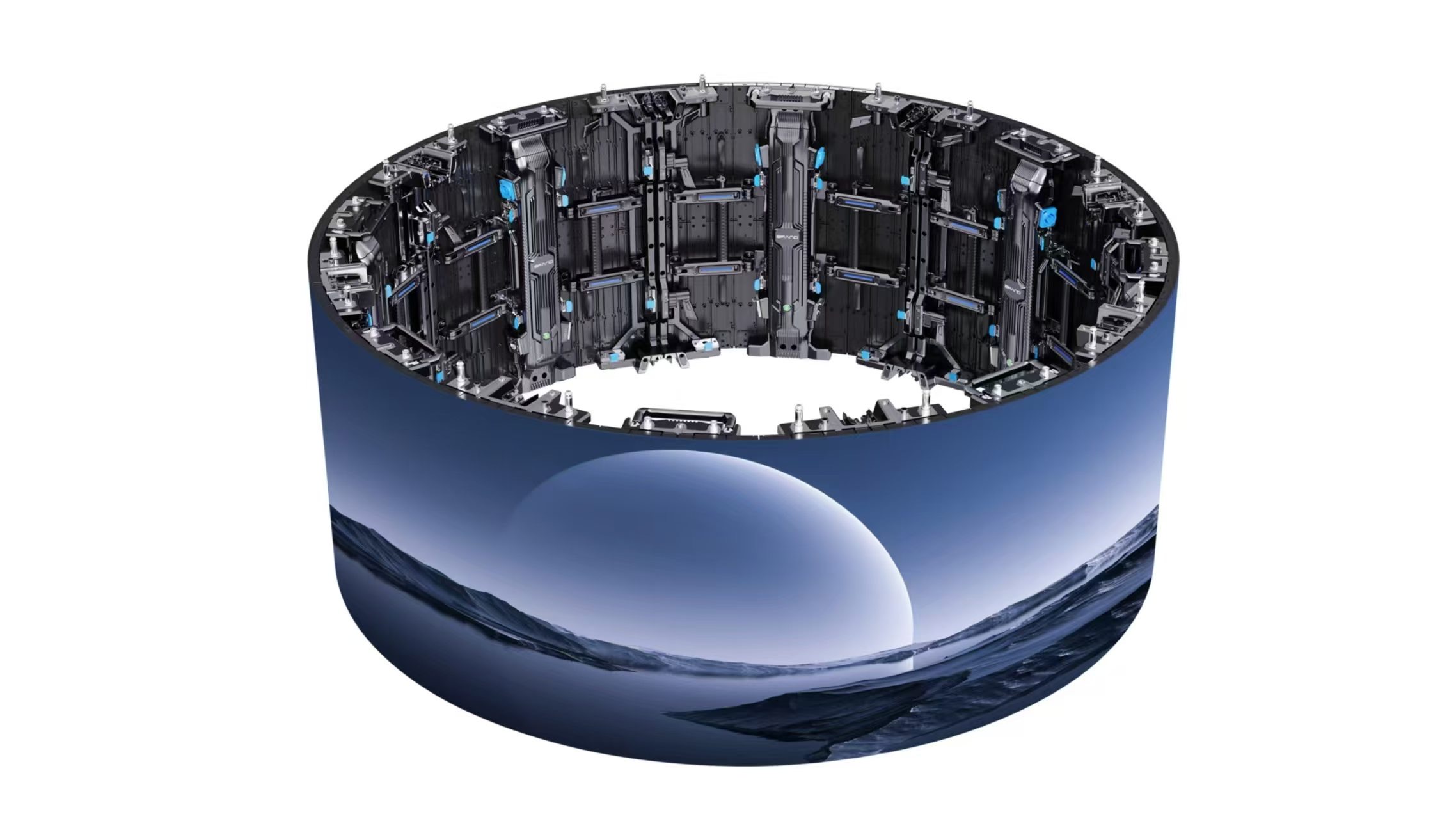
For this requirement our range covers it directly: the M-PRO indoor series (16:9 cabinet) and the RH-PRO fine-pitch COB.