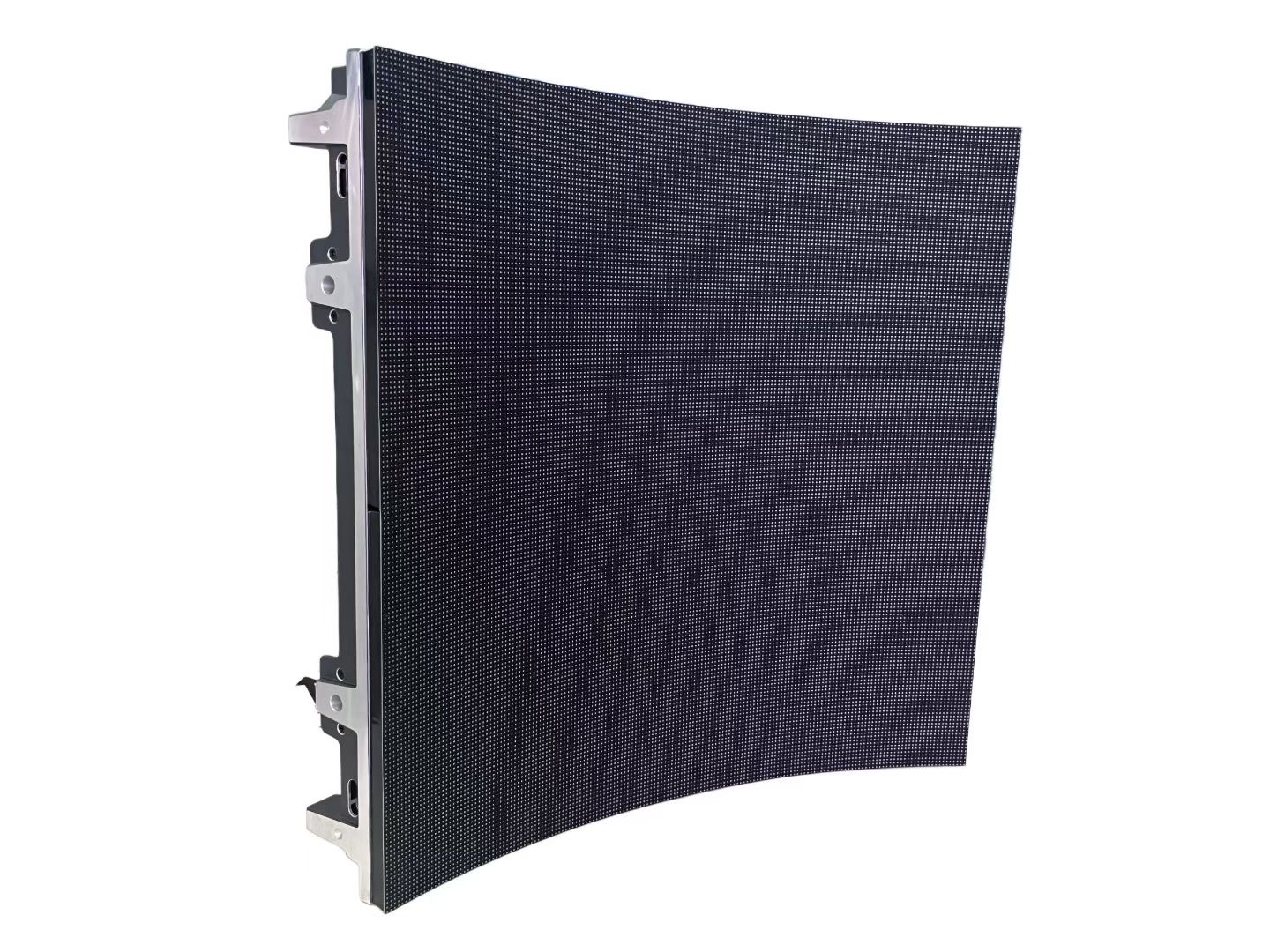
A showroom is a lighting-critical space, and that makes it one of the hardest environments for a display. Paint colours have to render truthfully under bright downlights, reflections have to be controlled, and the screen has to look as finished as the car beside it. This guide covers what automotive retail actually needs from LED.
Car retail has shifted from a forecourt purchase to an in-store decision. Buyers research online before they arrive, so the showroom visit is now about confirmation and comparison rather than discovery. That change puts pressure on the physical space to answer questions the website cannot: how does this colour look in person, how does this trim compare with that one, what does the car look like with this wheel fitted. A display answers those questions faster and more accurately than a brochure stand.
Manufacturers have responded by mandating digital elements in dealership fit-outs. Corporate identity programmes increasingly specify an LED feature wall behind the hero vehicle, a configurator screen near the sales desk and, in flagship locations, a lit floor beneath the display car. These are not optional extras; they are part of the brand standard, which means the dealer is buying to a specification rather than shopping for the cheapest panel.
Colour accuracy is the technical driver behind that specification. A showroom screen sits directly beside real painted panels, so any colour shift between the screen's rendering of a paint option and the physical car is immediately obvious. A display with poor calibration actively damages the sales conversation, which is why dealers with premium brands place a premium on accurate rendering and high contrast rather than on the largest possible diagonal.
The environment adds a second layer of demand. Showrooms are brightly lit to make the vehicles look their best, and that same light washes out a low-output screen. Floor-level installations take foot traffic and, in some sites, vehicle movement. A display specified for a museum would not last a season in a working dealership.
Sales process has also become more digital inside the room. Rather than walking a customer to a brochure rack, the salesperson now builds the specification on a screen: colour, trim, wheels, options and monthly figures, all in front of the buyer. That shift turns the display into a working tool rather than a decoration, and it raises the importance of touch responsiveness, fast image changes and a screen the salesperson can drive from a tablet without leaving the customer's side.
Contrast and colour accuracy come before brightness in this setting. A wall that produces deep blacks makes the surrounding lighting feel intentional, and a wide colour gamut keeps paint options faithful to the physical car. Fine pitch is usually required because the closest customers stand only two or three metres away, and a visible pixel structure undercuts the premium impression the room is trying to create.
Refresh rate matters more than most dealers expect. A showroom wall is photographed constantly, by customers and by the brand's own marketing team, so an indoor panel at 3840Hz keeps those images clean. Where a lit floor is installed under a display vehicle, load rating, a sealed surface and a protective top layer become mandatory rather than optional.
Think about maintenance access while the shop is still on paper. A feature wall is often framed by joinery, and a screen that can only be reached from behind creates a problem the moment a module fails. We prefer front-service cabinets for showroom walls, so a technician can work from the sales floor out of hours with no disruption to the vehicles on display. For floors, the same logic applies in reverse: the assembly should allow a module to be lifted without moving the car off its plinth.
| Application | Series | Cabinet Size | Key Specs | Best Use |
|---|---|---|---|---|
| Brand feature wall behind hero car | COB P1.5 | 600x337.5mm | 10000:1 contrast, 3840Hz, seamless | Premium marque showrooms |
| Vehicle configurator touch wall | CV-PRO P1.8 | 640x360mm | Fine pitch, touch-ready, colour-accurate | Sales desk briefing wall |
| Showroom lit floor | CV-PRO P2.6 | 500x500mm | Load-rated, sealed surface, high refresh | Flagship display car plinth |
| Delivery bay reveal screen | CV-PRO P2.5 | 640x360mm | High contrast, quick power-on, slim | Handover bay feature |
| Service reception signage | CV-PRO P3.9 | 500x500mm | Everyday duty, low heat, durable finish | Service and parts area |
For the main feature wall, the COB family is the natural recommendation. Its sealed surface tolerates the cleaning a showroom needs, its 10000:1 contrast ratio holds depth under bright downlighting, and its fine pitch keeps the vehicle imagery crisp from the customer's standing distance. Sizes above roughly 130 inches are assembled from modules, so the wall can be built to the architectural opening rather than the dealer choosing a screen that nearly fits.
For the configurator and information walls, the CV-PRO series gives a fine pitch with a slim cabinet and accurate colour at a lower cost per square metre, which suits positions where customers read rather than admire. Where a lit floor is specified under a vehicle plinth, we build a load-rated floor assembly with a protective surface and front access so a module can be serviced without moving the car.
For the delivery bay, where a vehicle is revealed to its new owner, we recommend a high-contrast screen that reaches full brightness almost immediately and stays colour-stable through repeated power cycles. That position is photographed for the customer and often for the brand, so it has to look correct on the first attempt every time. Our indoor panels run at 3840Hz, which keeps both stills and video free of scan bars in those handover photographs.
| Product | Key Features |
|---|---|
| COB P0.9 | Ultra-fine pitch, 10000:1 contrast, sealed surface |
| COB P1.2 | Fine pitch for hero walls, camera-safe 3840Hz |
| COB P1.5 | Balanced fine pitch, seamless feature wall |
| CV-PRO P1.8 | Slim cabinet, colour-accurate, front service |
| CV-PRO P2.6 | Lit floor build with load-rated frame |
Automotive fit-outs run on brand standards and tight opening dates, so we work to both. Asia Vision Technology supplies the COB and CV-PRO families with documented colour performance, contrast ratios and cabinet dimensions, so a dealer's corporate identity team can confirm the specification before the order is placed. Every product carries CE, FCC and RoHS certification.
Because we manufacture rather than resell, non-standard wall sizes, floor builds and touch-ready configurations are handled at the factory instead of being forced into a catalogue product. Delivery runs on a 15 to 20 working day cycle with a three-year warranty, which aligns with the schedule most dealership refits work to, and we hold matched spare modules for each build so a service visit is a straight swap that does not disturb the showroom floor.
We also coordinate with the contractors who build the room around the screen. Showroom feature walls sit inside joinery, behind illuminated ceilings and beside polished floors, and the display has to be set to the correct depth and height while those trades are still on site. Supplying the mounting pattern, the structural interface and the power and data locations early lets the shop-fitter frame the opening to the screen rather than the screen being squeezed into whatever gap is left, which is how a premium installation ends up looking like an afterthought.
For this requirement our range covers it directly: the M-PRO indoor series (16:9 cabinet) and the RH-PRO fine-pitch COB.
Ready to upgrade with LED displays?
Contact Asia Vision for specs, pricing, and free consultation.
📩 Get a Quote WhatsApp