By David
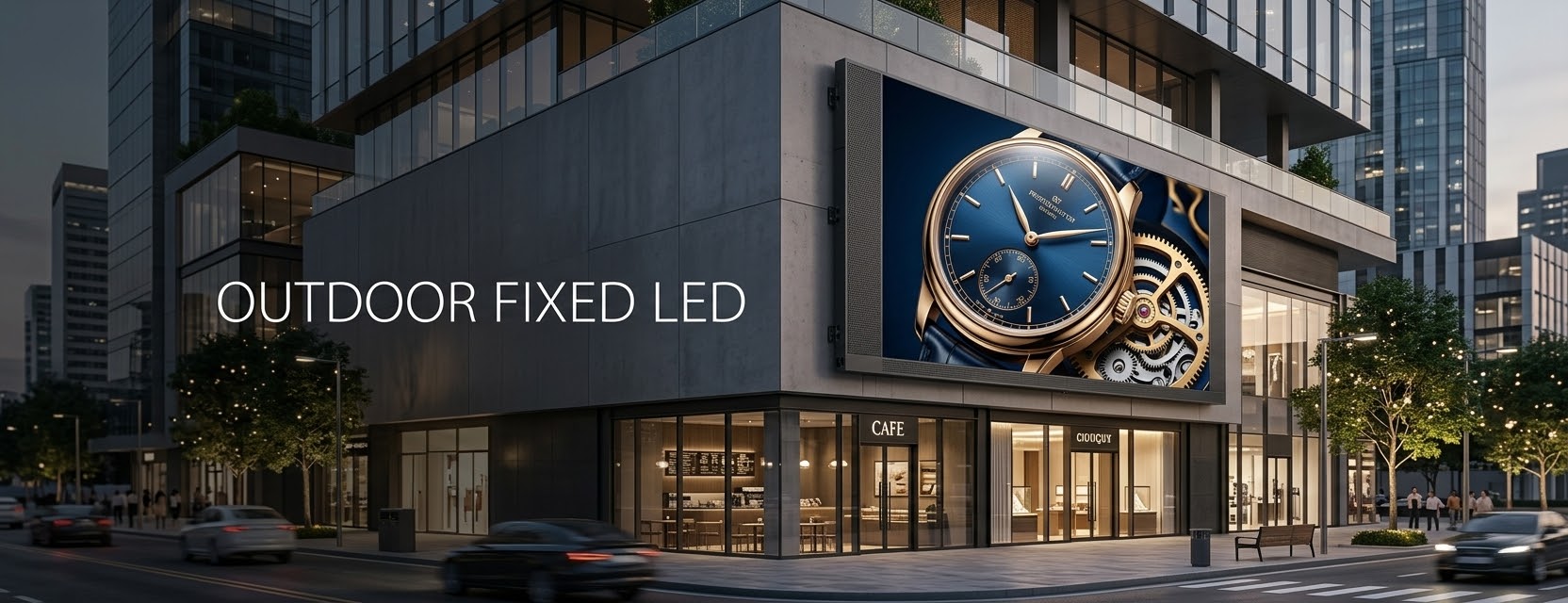
A facade LED display is a planning decision before it is a purchase. The screen cannot be specified as an equipment choice and fitted afterwards, because in most North American jurisdictions what may be installed on a building face — its size, position, brightness and sometimes whether it is allowed at all — is decided by the local sign code and zoning, not by the building owner.
This guide explains what governs a facade display, what the approvals cover, and where the specification has to be fixed.
A display on a building facade is regulated as signage and as construction, and both tracks have to clear.
As signage, it falls under the local sign code and zoning, which control where a sign of a given type and size may go. As construction, it is a structure attached to a building, so it also touches the building code and, at height, the structural review of how it is carried.
The practical consequence is that the screen's dimensions and position are set by what the jurisdiction will allow, and the engineering then serves that envelope rather than the other way round.
| Dimension | What it typically governs |
|---|---|
| Size and area | The maximum display area permitted for the site and the district |
| Location and setback | Where on the building the sign may sit, and its distance from other uses |
| Brightness and dimming | Night-time output and whether automatic dimming is required |
| Motion and content | Whether animation, video or changing messages are permitted, and any dwell requirements |
| Orientation | Whether the face may look toward a roadway, a residence, or a specific district |
These controls are local. Two municipalities that share a border can take opposite positions on the same screen, which is why the governing question is never general but always "what does this jurisdiction's code say for this site".
Where a facade display faces housing or a roadway, the code often reaches into how bright the screen may be at night and whether it must dim automatically.
That turns a specification question into a compliance one: the display's dimming range and its ability to follow an ambient sensor become part of what the approval requires, and the manufacturer's data has to show the range. A screen that cannot dim far enough to meet the condition may not be approvable for that site.
Some jurisdictions route a facade display through a design review or historic preservation process on top of the sign permit.
That review is about appearance and context as much as compliance, and it can take longer, meet less often, and ask for screens to be hidden, minimised or integrated in a particular way. A project in a designated district should assume a longer and less predictable approval path, and plan the schedule around it rather than against it.

The applicant is normally the property owner or the tenant, often working through a sign contractor or permit expediter, and in some jurisdictions only a licensed sign contractor may file.
The manufacturer is not the applicant, but its documents are part of the submission: dimensioned drawings, the structural attachment detail, the brightness and dimming data, and the electrical load. A supplier that cannot supply these in a usable form slows the approval rather than the purchase.
The most common and most expensive mistake on a facade project is treating the screen as a later choice.
An approval is granted for a particular size, position and performance. Substituting a different screen afterwards can invalidate the approval and force a new filing, which costs far more than the price difference that prompted the substitution. The screen should therefore be settled during design, at the same time as the structure that will carry it.
The manufacturer's job is to make the approval and the engineering possible: supply the drawings, the load and dimming data, and the attachment information the submission requires, at the time the designer needs them.
Our factory runs 8 IC production lines and 7 LED SMT production lines under ISO 9001:2015, with CE, FCC and RoHS certification, a 15 to 20 working day lead time and a three-year warranty. For facade work the usual match is the D-PRO outdoor series, with the COB ZH series where a sealed, high-brightness face and wind resistance are both required.
For the structural and procurement side, see facade LED structural integration and facade LED display procurement.
Send your specifications for a detailed LED display price quote with UL/ETL certification.
Request Price Quote Chat on WhatsApp