By David
What is an led display museum gallery screen? An led display museum gallery screen is a display in a museum or gallery, showing interpretive content, video art, or exhibitions. It needs colour accuracy and low brightness to suit the space. This 2026 guide explains how to specify one.
A museum or gallery has specific needs. The display must not overpower the exhibits, the light must be controlled, and the colour must be accurate, especially for video art or image-based content. A screen that is too bright or too colourful disturbs the space.
This led display museum gallery guide is written for museums, galleries, and exhibition designers. It covers the colour, the brightness, the content, and the specification.
For video art or photographic exhibits, the colour must match the creator's intent. A screen that shifts the colour misrepresents the work. The display should be calibrated to a known standard, often with a high colour accuracy and gray scale depth.
| Need | Display Requirement | Why |
|---|---|---|
| Video art | High colour accuracy | Represents the work |
| Interpretive content | Readability | Serves the visitor |
| Low-light gallery | Low brightness | Does not overpower |
| Feature wall | Seamless image | Looks like one piece |
A gallery is often dim to protect the exhibits and create an atmosphere. The screen must run at low brightness without colour shift or flicker, which suits a space where a bright screen would break the mood. The low-brightness performance is critical.
The auto-dimming keeps the screen at the right level through the day and the evening. A screen that is stable at low brightness serves the gallery; one that shifts colour at low levels does not.
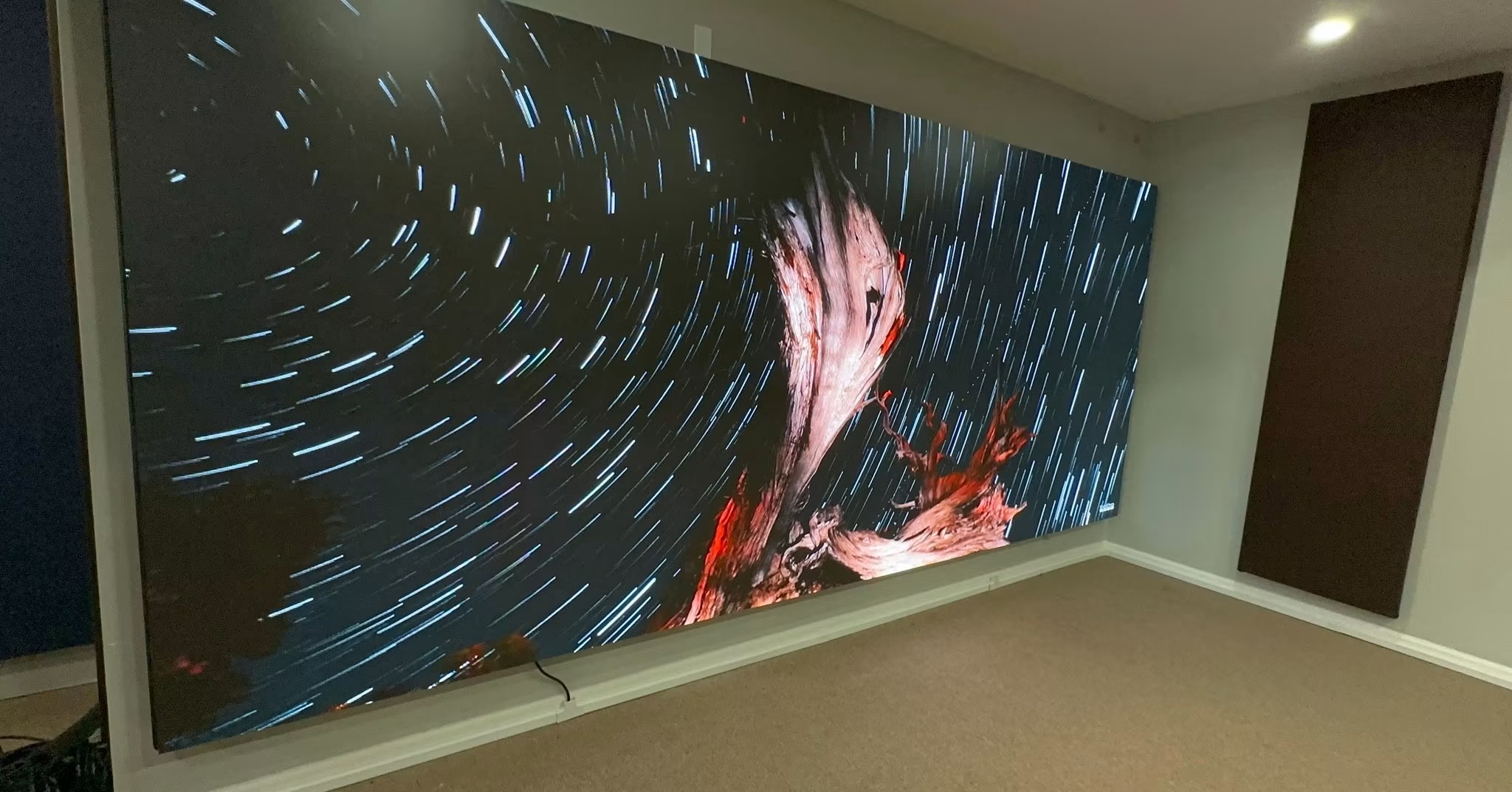
For a feature wall, the image should look like one piece, with no visible seams between panels. The calibration and the mounting decide the seamless look. A gallery screen that shows panel joins undermines the artwork.
The seamlessness also depends on the pixel pitch and the viewing distance. A fine pitch screen viewed close shows no seams; a coarse one does. The buyer should match the pitch to the visitor's viewing distance.
A gallery is a quiet space, and a noisy screen disturbs it. The cooling must be quiet, which may mean passive or low-noise cooling. The buyer should confirm the noise level, especially for a screen near the exhibits.
The fan noise is often overlooked until the screen is installed. A loud screen in a quiet gallery is a distraction. The specification should include the noise limit for the space.
The content serves the exhibition, whether interpretive or artistic. It should suit the space and the audience, and the creators should have the colour and the brightness they need. The content and the screen are one system.
The content system should be simple for the gallery staff, who may not be technical. A system that is hard to use slows the exhibition changes. The ease of the content is part of the specification.
The screen's light interacts with the gallery lighting. A screen that is too bright dominates; one that is too dim is unreadable. The design should balance the screen with the lighting, often with the lighting designer's input.
The screen's reflection and placement also matter, especially near glass or exhibits. The buyer should consider the sightlines and the reflections, so the screen serves the visitors without distracting from the exhibits.
The common mistakes are poor colour accuracy, a screen too bright for the space, and noisy cooling. Others include visible seams and a content system that is hard to use. Each weakens the exhibition.
The remedy is to specify the colour, the low-brightness performance, the quiet cooling, and the content system, and to consider the lighting and the sightlines. The screen then serves the exhibition.
The screen serves the exhibit, whether by interpretative content or as a work of art itself. The screen should not compete with the exhibits, but support them. The design should consider the exhibit's needs first.
For a video artwork, the screen is the medium, and its quality is the artwork's quality. The buyer should choose the screen for the art, with the colour and the brightness the artist needs. The screen is part of the work.
The screen should serve the visitor, whether by explaining, guiding, or immersing. The content and the screen together create the experience. The buyer should design for the visitor's journey through the exhibition.
The screen's position and size should suit the visitor's movement. A screen that is too small or in the wrong place is missed. The layout should guide the visitor to the screens and the exhibits together.
A museum controls the light to protect the exhibits, and the screens must fit that control. A screen that is too bright may damage light-sensitive exhibits or disturb the controlled environment. The brightness should suit the conservation needs.
The screen's own light also affects the space. The buyer should consider the screen's output and its effect on the exhibits. The conservation team should be part of the planning.
A museum serves a diverse audience, including visitors with different needs. The screen's content should be accessible, with legible text and, where needed, audio or captions. The accessibility is part of serving the visitors.
The screen's height and position should suit visitors of different ages and abilities. A screen that is too high or too low is hard to see. The layout should consider the audience.
A museum expects its exhibits to work every day, so the screens must be reliable. A failed screen disrupts the exhibition and the visitor experience. The screens need quality components and a maintenance plan.
The maintenance should be planned to avoid disrupting the visitors, often outside the opening hours. The buyer should agree the maintenance with the supplier. The reliability keeps the exhibition running.
The installation in a museum or gallery must respect the space, which may be historic or protected. The mounting should be discreet and reversible where possible. The buyer should plan the installation with the space in mind.
The installation also involves the cabling and the power, which should be hidden and safe. A tidy installation respects the exhibits and the space. The plan should address the routing and the access.
A museum's budget may come from several sources, including grants and donors. The buyer should plan the funding and the specification together, so the screen suits the budget. A screen that exceeds the budget cannot proceed.
The screen's value is in the visitor experience and the exhibition, which may justify the cost. The buyer should present the case for the investment, with the benefits to the museum and the audience. The screen serves the mission.
The screen can interpret the exhibits, telling the visitor about the history, the artist, or the context. The interpretive content should be clear and engaging, and it should not compete with the exhibits. The screen supports the interpretation.
The content design for interpretation differs from the artwork. It may be more text-based and structured. The buyer should consider both uses when specifying the screen and the content system.
| Gallery Need | Screen Response |
|---|---|
| Dim space | Low stable brightness |
| Video art | High colour accuracy |
| Quiet room | Quiet cooling |
| Feature wall | Seamless image |
A gallery hosts temporary exhibitions, so the screen should adapt to different shows. A flexible content system lets the gallery change the screen for each exhibition. The flexibility is part of the specification.
The screen's position and size should also suit the changing exhibitions. A screen that is fixed to one show may not serve the next. The buyer should consider the screen's role across the gallery's programme.
The led display museum gallery screen shows interpretive or artistic content with accuracy in a controlled space. Specify the colour, the low brightness, the quiet cooling, and the content system, and consider the lighting and the sightlines.
Buyers who specify the screen for the gallery get a display that serves the exhibition without overpowering it. The screen is a tool for the curator, and the specification should serve the art.
Tell us your space and exhibition, and we will specify the colour, brightness, and cooling for your museum or gallery LED display.
Request Gallery SpecChat on WhatsApp