By David
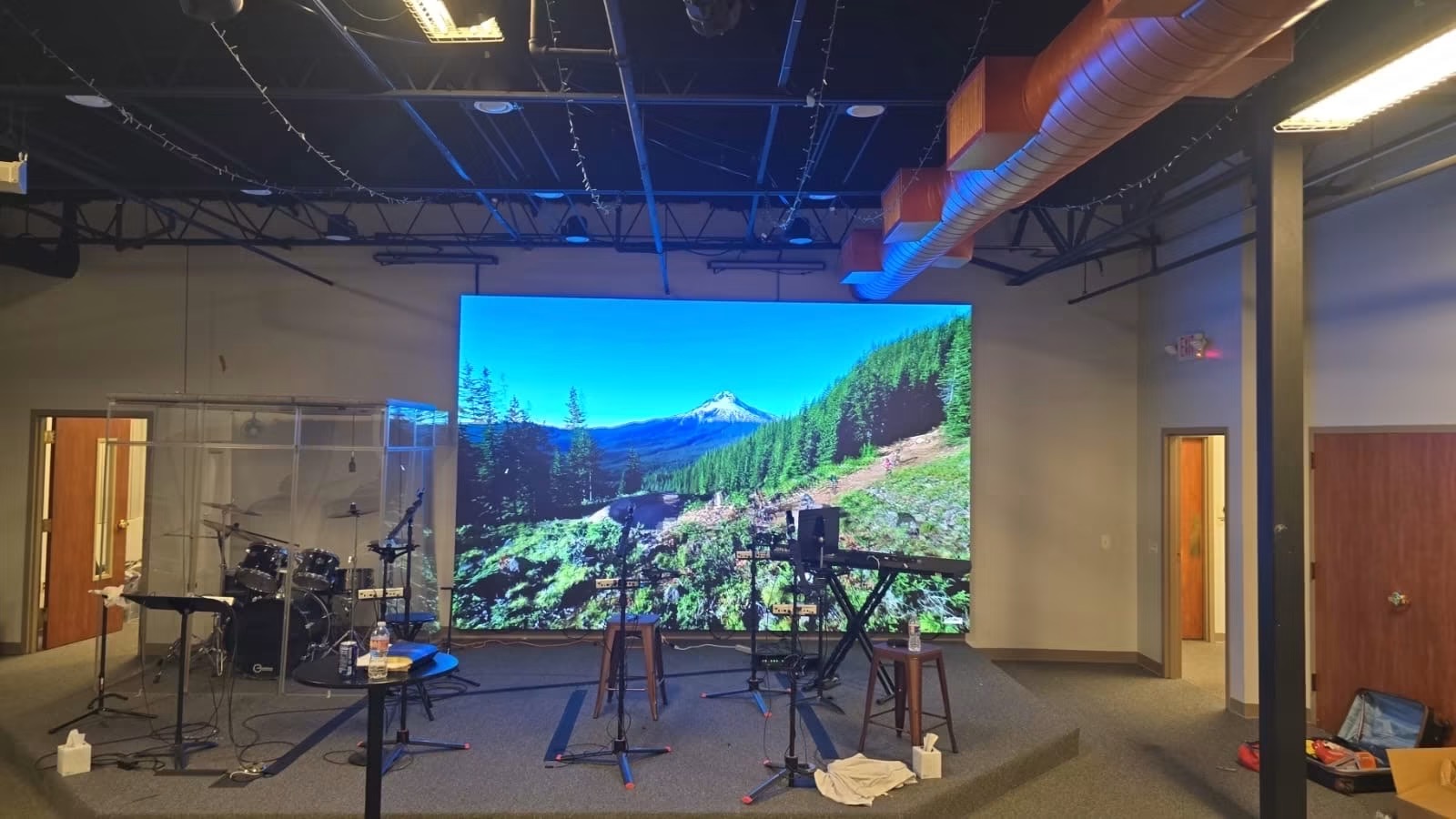
What is an led display church worship screen? An led display church worship screen is a display in a sanctuary or worship space, showing lyrics, sermon slides, and video to the congregation. It replaces or supplements a projector. This 2026 guide explains how to specify one.
A worship space needs a display that is readable from every seat, from the front row to the back. The congregation reads the lyrics while singing, so the display must be clear and reliable. A screen that is hard to read distracts from the service.
This led display church worship guide is written for churches and worship teams. It covers the brightness, the size, the content, and the specification for a sanctuary display.
A projector needs a dark room and a clear line to the screen, and its image fades and needs lamp or filter changes. An LED screen is bright, needs no projection line, and lasts for years. For a worship space used in daylight, an LED screen is often the better choice.
| Display | Strengths | Limits |
|---|---|---|
| LED screen | Bright, no projector line, long life | Higher cost |
| Projector | Lower cost | Needs dark, lamp changes |
| LCD video wall | Sharp, seamless | Visible bezels or panels |
| Hybrid | LED plus projection | Complexity and cost |
The brightness depends on the light in the sanctuary. A space with large windows and daylight needs a brighter screen than a dim traditional interior. The screen should also dim for evening services and quiet moments.
The screen should not glare at the congregation or the platform. The auto-dimming keeps the brightness comfortable through the service. A screen that is too bright in a dim space is tiring to read.
The screen must be readable from the back row, which is the longest viewing distance. The size and the pixel pitch should be set for that distance. A screen that is fine for the front is unreadable at the back.
The screen position matters, whether behind the platform as a backdrop or at the sides. A center screen is read by the whole congregation; side screens serve those with a blocked view. The layout should suit the sanctuary.
The content is mainly lyrics and slides, with video for special services. The lyrics must be large and legible, with good contrast. The worship team should be able to update the content easily, often between services.
The content system should be simple for the volunteers who run it. A complex system slows the preparation and risks a mistake during the service. The ease of the content is part of the specification.
The screen becomes part of the sanctuary's look, so its appearance matters. A screen that dominates the space may not suit a traditional building; a discreet one suits better. The buyer should consider the screen's place in the design.
The screen's light also affects the space, especially in a dim sanctuary. The brightness and the content should enhance the worship, not distract. The design should consider the atmosphere.
A church screen is an investment in the worship experience. The budget should cover the screen, the installation, the structure, and the content system. The buyer should compare the total cost across the options, including a projector.
The screen's value is in the congregation's experience and the clarity of the message. The return is not financial but is real. The buyer should weigh the cost against the benefit to the worship.
The common mistakes are too small a screen for the back row, no auto-dimming, and a content system that is hard for volunteers. Others include a screen that clashes with the sanctuary and a brightness that distracts. Each weakens the worship.
The remedy is to specify the size for the back row, add auto-dimming, choose a simple content system, and consider the sanctuary's look. The screen then serves the worship.
Different worship styles suit different screens. A traditional service may prefer a discreet screen, while a contemporary one may use a large stage backdrop. The screen's role should match the congregation's worship.
The buyer should consider the worship style when choosing the size and the position. A screen that suits the style serves the service; one that does not distracts. The design is part of the worship planning.
Most churches rely on volunteers to run the screen and the content. The system must be simple enough for them, with clear controls and reliable operation. A complex system burdens the volunteers and risks errors during the service.
The buyer should involve the volunteers in the choice, so the system suits the people who use it. A screen the team can run confidently serves better than one with more features. The ease of use is part of the specification.
A church may grow or change its services, so the screen should allow for that. A modular screen can be expanded; a fixed one may not. The buyer should consider the future when choosing the size and the system.
The screen should also support new content formats, such as video or streaming. A system that can grow with the church's needs lasts longer. The buyer should ask about the upgrade path.
A screen has no sound, but its cooling may. A noisy screen disturbs a quiet service, so the cooling should be quiet. The buyer should confirm the noise level, especially for a screen near the congregation.
The screen's placement also affects the sightlines and the sound. A screen in the wrong place blocks the view or reflects the light. The layout should consider the room's acoustics and the sightlines together.
Many churches are older buildings with character, and a large screen may not suit. The buyer should consider the building's style and the screen's place in it. A discreet screen may serve better than a dominating one.
The building's structure may also limit the mounting, especially if it is listed or historic. The buyer should check the constraints before choosing the screen. The installation should respect the building.
A church budget is often limited, so the screen should be cost-effective. The buyer should weigh the options, including a projector, and choose the one that serves the worship within the budget. The cheapest is not always the best value.
The screen's running cost also matters, because the church operates on a budget. An efficient screen with low maintenance costs less over the years. The total cost is the fair comparison.
The installation should be planned to avoid disturbing the services. The work may be done between services or during the week. The buyer should schedule the installation to suit the church's calendar.
The installation also involves the wiring and the mounting, which should be tidy and safe. The buyer should confirm the plan and the access. A clean installation respects the building and the worship.
The screen can support the sermon with the key points, the readings, and the images. The content should aid the message, not distract from it. The screen is a tool for the preacher as well as the congregation.
The content design for a sermon differs from the lyrics. The sermon content may be simpler, with fewer changes. The buyer should consider both uses when specifying the screen and the system.
| Church Need | Screen Response |
|---|---|
| Read from back row | Size for distance |
| Daylight interior | Higher brightness |
| Evening service | Auto-dimming |
| Volunteer run | Simple content system |
Many churches livestream their services, and the screen appears in the stream. The screen's brightness and content should look good on camera as well as in the room. The camera performance matters for a livestream.
The screen should avoid flicker and banding on camera, which the refresh rate decides. The buyer should test the screen with the streaming camera. The stream is part of the church's outreach, and the screen should serve it.
The led display church worship screen shows lyrics and video to the congregation, readably from every seat. Specify the brightness, the size, and the content for the sanctuary, and choose a simple system for the volunteers.
Buyers who specify the screen for the sanctuary get a display that serves the worship without distracting. The screen is a tool for the service, and the specification should serve that purpose.
Tell us your sanctuary and seating, and we will specify the brightness, size, and content system for your church LED display.
Request Church Screen SpecChat on WhatsApp