
By David
What is LED display benchmark testing? LED display benchmark testing is the practice of comparing candidate screens under identical conditions with the same content and the same measurements, so the comparison rests on evidence rather than on impressions. This 2026 guide explains how to run a benchmark that produces a defensible result.
Most supplier comparisons are made in different rooms, at different brightness levels, with different content, and at different times. The screen that happens to be demonstrated best looks best, which is not the same as being the better screen.
LED display benchmark testing removes that variation. When both screens see the same content at the same brightness and are measured with the same instrument, the difference between them is the product rather than the demonstration.
Write the protocol before seeing either screen, and give the same protocol to every supplier. The protocol states the content, the brightness setting, the warm-up period, the measurements, and the order in which the tests are run.
Fixing the protocol in advance is what makes the result defensible. If the test changes between demonstrations, the buyer cannot claim that the comparison was fair, and the losing supplier has a legitimate objection.
| Protocol Element | What to Fix | Why It Matters |
|---|---|---|
| Content | Same files for every screen | Removes content advantage |
| Brightness | Same setting on both | Removes brightness advantage |
| Warm-up | Same duration before testing | Removes warm-state advantage |
| Measurements | Same instrument and points | Removes method variation |
| Order | Defined sequence of tests | Removes ordering bias |
| Observers | Same people score both | Removes observer variation |
Keep the content set small and demanding. A dark gradient, a fast motion clip, and a skin tone image between them reveal banding, smearing, and color shift, which are the differences that matter in service.
Run the tests in the same room if possible, at the same time of day and with the same lighting. If the screens cannot be in the same location, reproduce the conditions as closely as the environment allows and record what differed.
Record everything, including the conditions that could not be matched. A benchmark with a documented limitation is more useful than one that claims an ideal comparison, because the buyer and the suppliers can all see what was and was not controlled.
When two screens are close on the headline specification, the difference lies in the measurements that suppliers rarely quote. Uniformity, low-end gray scale, color drift, and power at the operating brightness are the figures that separate them.
Measure all of these on both screens rather than relying on the datasheet. A datasheet figure is a claim, while a measurement taken in the room is evidence, and the benchmark exists to replace one with the other.
| Measurement | Instrument | What It Reveals |
|---|---|---|
| Brightness | Light meter | Output at the operating setting |
| Uniformity | Meter on a grid | Evenness across the wall |
| Gray scale | Gradient assessment | Low-end performance |
| Color | Colorimeter or spectrometer | Accuracy and consistency |
| Power | Power meter | Running cost at operating brightness |
| Refresh | Camera at shutter speed | Broadcast suitability |
Take each measurement more than once. A single reading can be affected by a transient condition, and a repeated measurement that agrees with the first is far stronger evidence than a one-off figure recorded in a hurry.
Not everything can be measured, and visual assessment has a place in a benchmark. Banding, motion smear, and the appearance of skin tone are judged by eye, but the judgement must be made under the same conditions and by the same people for both screens.
Score the visual assessment against defined questions rather than a general impression. Ask whether banding is visible in the dark scene, whether motion smears, and whether color shift is noticeable, and record the answer for each screen.
Assemble the results into a single evidence pack with the measurements, the photographs, the camera footage, and the conditions recorded. The pack is what supports the eventual award and what protects the buyer if the choice is questioned.
Share the pack with the suppliers involved. A supplier who sees the measurements understands why they lost and is more likely to bid again with a better product, while one who receives only a rejection letter may conclude the process was arbitrary.
Each mistake weakens the comparison and shifts the decision back toward whoever demonstrates best. LED display benchmark testing done with a fixed protocol turns a subjective choice into a documented one.
Led display benchmark testing is most valuable when two candidates are close, because that is when the decision would otherwise turn on the quality of the demonstration.
Write the result up as a short document rather than leaving it in a notebook. The document should state the protocol, the conditions, the measurements, and any limitation that could not be controlled, so a reader several months later can understand what was actually tested.
Attach the measurements to the award record. A benchmark that is documented supports the decision if it is questioned, while one that lives only in the memory of the people present cannot be defended.
A benchmark costs time for both the buyer and the suppliers, and it is not always necessary. Where one candidate is clearly ahead on evidence and price, the effort is better spent on the acceptance criteria than on a comparison that will confirm the obvious.
Reserve led display benchmark testing for the decisions where two candidates are genuinely close, or where the application is demanding enough that small differences matter. Used selectively, the benchmark carries more weight than one run routinely on every purchase.
The most common failures are comparing screens in different rooms, using each supplier's own demonstration content, measuring at different brightness settings, and recording impressions rather than values.
Each mistake shifts the decision back toward whoever demonstrates best, which is exactly what led display benchmark testing exists to prevent.
Share the test protocol with every supplier before the comparison and give them the same notice. A supplier who knows in advance what will be measured brings the right unit and the right settings, which makes the comparison fairer rather than easier.
Invite them to comment on the protocol before it is fixed. A supplier who raises a legitimate concern about the method improves the benchmark, and one who objects afterwards has no grounds, because the protocol was agreed in advance.
Record the agreement, the protocol, and any comment alongside the results, so the evidence pack shows not only what was measured but that the method was agreed before anyone saw the result.
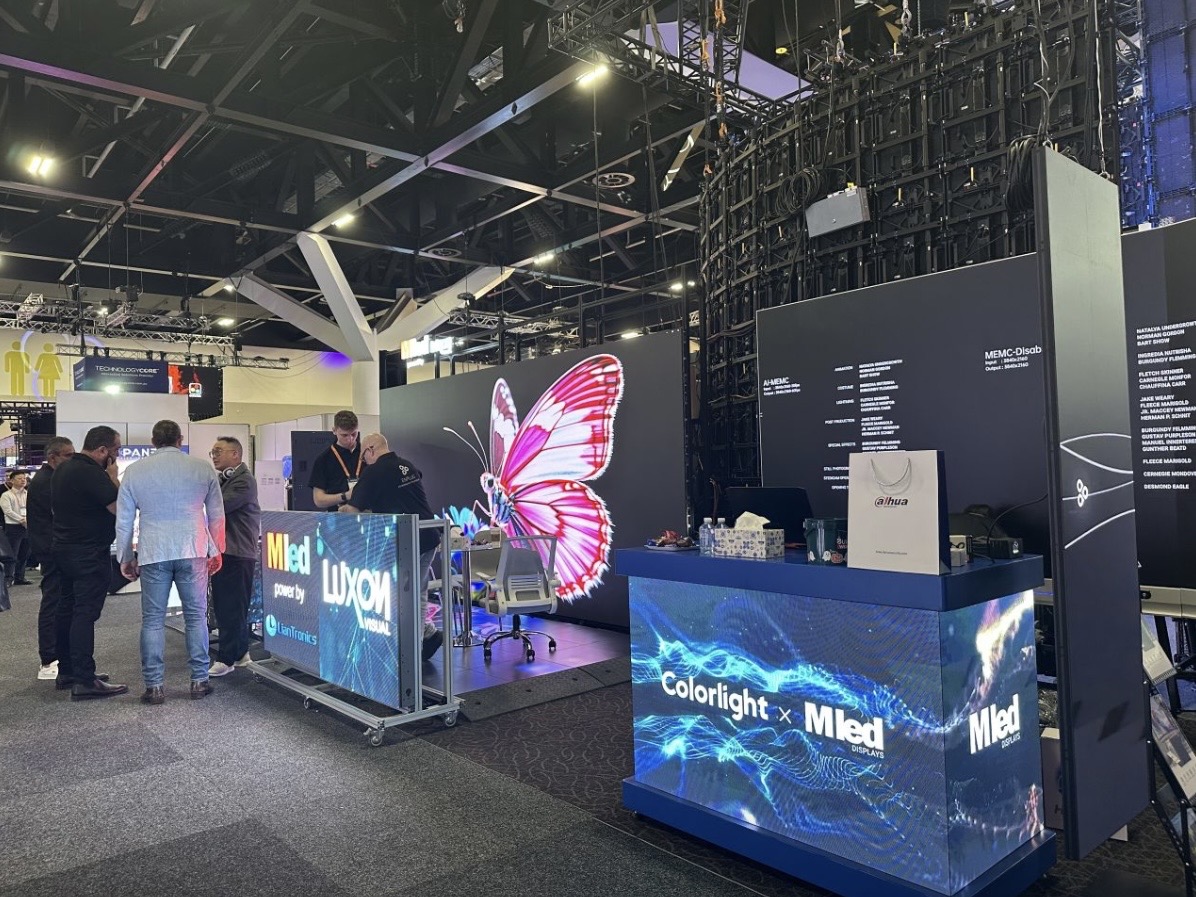
Send us your candidate list and requirements, and we will supply the measurement data for a side-by-side comparison.
Request Benchmark PackChat on WhatsApp