By David
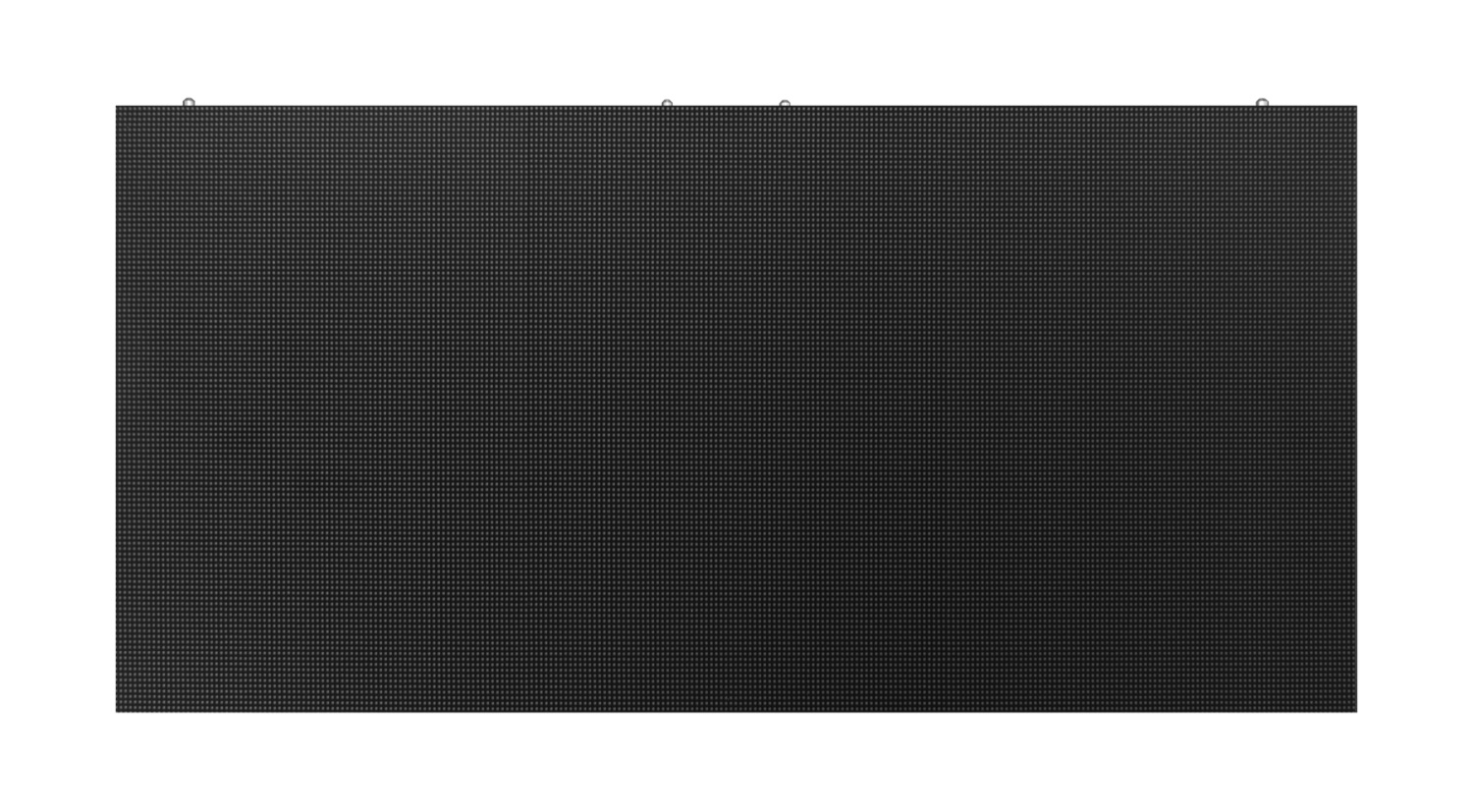
A dvLED video wall is a large display built from LED cabinets — what much of the world simply calls an LED screen or LED display. The term dvLED (direct-view LED) is the label the AV industry, and particularly US integrators, consultants and procurement teams, use to separate it from LCD video walls, which are built from tiled flat panels.
The distinction matters commercially. A buyer who searches for a “video wall” may be shown LCD panel arrays by default, while the project actually calls for an emissive LED surface with no bezels, higher brightness and a much longer service life. This guide covers where the term came from, what a dvLED wall is physically made of, and how the technology maps onto the product range Asia Vision manufactures.
dvLED stands for direct-view LED. “Direct view” describes the way the image reaches the viewer: each pixel is a light-emitting diode that the audience looks at directly, with nothing projected and nothing reflected. That is the opposite of a projection system, where the light travels to a screen and bounces back.
The acronym became the industry standard because “LED” alone had become ambiguous. LED also describes the backlights inside LCD panels, so AV consultants needed a term that unambiguously meant the emissive display itself. In specification documents, submittals and bid packages across the US market, dvLED is what you will read.
Both are called video walls, and both are made from repeated modules, but the similarity ends there.
An LCD video wall is an array of complete LCD panels with a bezel around each one. The bezels cannot be eliminated, so the finished wall carries a visible grid. A dvLED wall uses LED cabinets that butt together, so the image crosses cabinet boundaries without a line.
That single mechanical difference drives the rest of the comparison.
| Property | dvLED video wall | LCD video wall |
|---|---|---|
| Seams | None between cabinets | Bezel line at every panel edge |
| Construction | LED cabinets with pixel-pitch modules | Complete LCD panels in a frame |
| Brightness | Designed for high-ambient spaces | Limited by panel backlight |
| Repair unit | Individual module from the face | Whole panel |
| Custom size | Any size, to the cabinet module | Restricted to panel multiples |
| Lifespan | Long, with module-level service | Panel-level replacement |
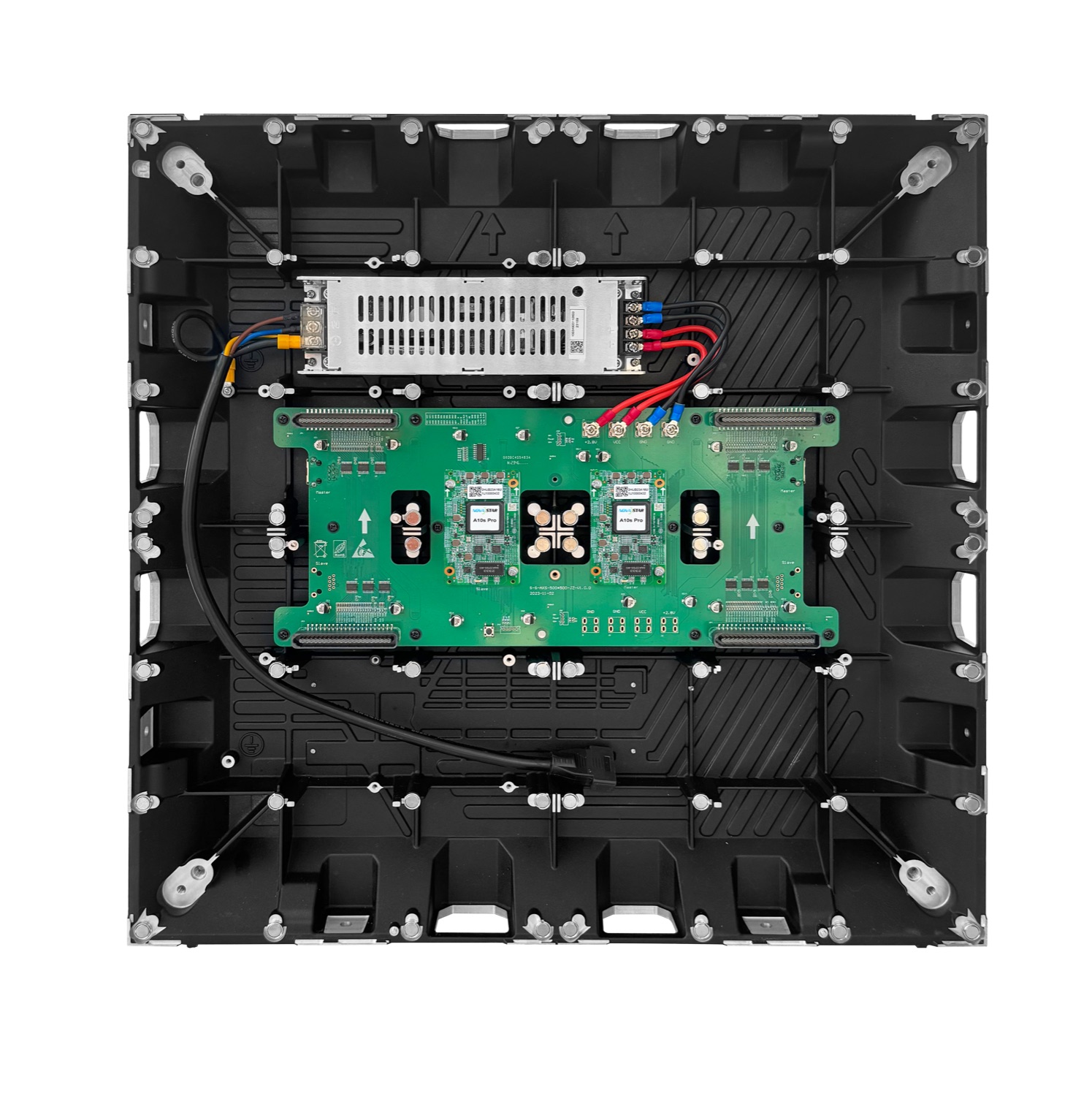
A dvLED wall is a stack of parts, and knowing the stack is what lets a buyer read a specification. From back to front: a mounting structure, a cabinet frame, the LED modules that carry the pixels, the power supplies and receiving cards, and a sending system that drives the image.
Two of those layers determine most of the cost and most of the risk. The module sets the pixel pitch and the image quality, and the cabinet sets the mechanical strength, the maintenance access and how precisely the wall lines up. In our own range, cabinets are standardised at 500 × 500 mm across the rental and fine-pitch families, which keeps spare parts and expansions predictable.
Pixel pitch — the distance between the centres of two adjacent pixels — is the number that ties viewing distance to cost. We manufacture twelve series spanning the full range, so the pitch can be matched to the room rather than the other way around.
The table below lists the pitch and brightness figures printed in our own specifications.
| Series | Type | Pitch | Brightness | Cabinet |
|---|---|---|---|---|
| RH-PRO COB | Indoor fine pitch | P0.78 / P0.93 / P1.25 | 800–1200 cd/m² | — |
| CV-PRO | Indoor COB | Fine pitch | 800 cd/m² | — |
| M-PRO | Indoor small pitch | P1.25 / P1.56 / P1.87 | 800 cd/m² | — |
| R-PRO | Indoor fixed | P1.25 / P1.53 / P1.86 | — | 640 × 480 mm |
| EF | Outdoor COB | P1.5625 / P1.953 | 3000 cd/m² | 500 × 500 mm |
| EH-PRO | Outdoor COB (IP65) | P1.5625 / P1.953 | 3500 cd/m² | 500 × 500 × 90 mm |
| Z Series | Rental COB | P1.95 / P2.6 | 1200 cd/m² | 500 × 500 mm, ±5° curving |
| ZH Series | Touring COB | P1.95 / P2.6 | 3400–4000 cd/m² | 500 × 1000 × 94 mm |
| D-PRO | Outdoor SMD | P5 / P5.7 / P6.67 / P8 | up to 10,000 cd/m² | — |
| E-PRO | XR studio rental | Rental | — | 500 × 500 / 500 × 1000 mm |
| S Series | Rental | Rental | — | 500 × 500 / 1000 mm |
| X Series | All-platform | All | — | 500 × 500 mm ecosystem |
Because a dvLED wall is built to size from cabinets, the specification is open-ended in a way an LCD array is not. A wall can be any width and height that the cabinet module divides into, and shapes that are not rectangular are achievable with curved or custom cabinets.
The other practical difference is maintenance. On our indoor and rental ranges, modules are serviceable from the face of the screen, so a single failed module is replaced without dismantling the wall behind it.
Deliveries ship in 15 to 20 working days with a three-year warranty, and the factory holds ISO 9001:2015 with CE, FCC and RoHS certification.
For this requirement our range covers it directly: the COB CV-PRO series the RH-PRO fine-pitch COB.
Send your specifications for a detailed LED display price quote with UL/ETL certification.
Request Price Quote Chat on WhatsApp