What are TLCI and SSI for a studio LED wall? They are lighting-colour indices that a buyer can ask for when the wall is not only a picture surface, but also a light that falls on talent, costumes and set. The Television Lighting Consistency Index (TLCI) and the Spectral Similarity Index (SSI) describe how a source’s spectrum behaves for a camera or against a named reference illuminant. They are not the same as display gamut, white balance or contrast. The buying decision is whether the RFQ asks for those lighting data — and a camera test — or treats a DCI-P3 or “broadcast colour” claim as if it already answered the question.
This guide is for broadcast engineers, lighting directors, DPs and integrators specifying a camera-facing studio or volume wall. It covers only TLCI, SSI and the acceptance data that go with them. White balance and calibration belong in the white-balance calibration guide; batch-to-batch uniformity belongs in the colour-uniformity guide; Kelvin and white-point choice belong in the colour-temperature guide; contrast belongs in the contrast-ratio guide. For the studio wall as a system, use the broadcast studio buying guide. A completed studio is described in the Yle News Finland case. Transfer functions (HLG and PQ) are a different clause and are covered in the HDR, HLG and PQ specification.
In a studio, the LED wall is often close enough to light the talent. Skin, wardrobe and props then take their colour from the wall’s spectrum as well as from the pictures on it. A wall can have a wide display gamut and still be a poor luminaire: a spiky or gappy spectrum can make a camera’s colour matrix work harder, or it can fail to match the house softlights and practicals. TLCI and SSI exist to describe that lighting behaviour. They do not replace a camera test, and they do not replace a display calibration report.
TLCI, published by the EBU as a method for lighting, scores how a source is expected to render a set of colours through a typical broadcast-camera model, against a reference. SSI, published by the Academy as a spectral similarity index, scores how closely a source’s spectral power distribution matches a named reference (for example a daylight or a black-body locus). Both are usually reported on a 0–100 scale. This article does not invent a pass mark, and it does not treat a catalogue “high TLCI” claim as a substitute for a named method, a named reference and a report on the proposed series.
They are not display-gamut figures. A published DCI-P3 coverage describes how much of that display colour space the wall can reach; it says nothing, by itself, about the spectrum that falls on a face in front of the wall. They are not a white-balance setting, a CCT, a contrast ratio, or an HDR transfer function. Those belong in their own clauses, written against the guides linked above. They are also not a promise that every camera will see the same result: TLCI uses a defined camera model, and a house camera with a different spectral sensitivity still has to be tested on the installed wall.
If the project only cares about the wall as a picture — a backdrop that is not lighting talent — a lighting-index clause may be unnecessary. If people will stand in front of it, or if the wall is used as a soft source, the clause is worth writing. Say which job the wall is doing, so the bidder is not asked for lighting data on a signage wall, or excused from them on a studio cyc.
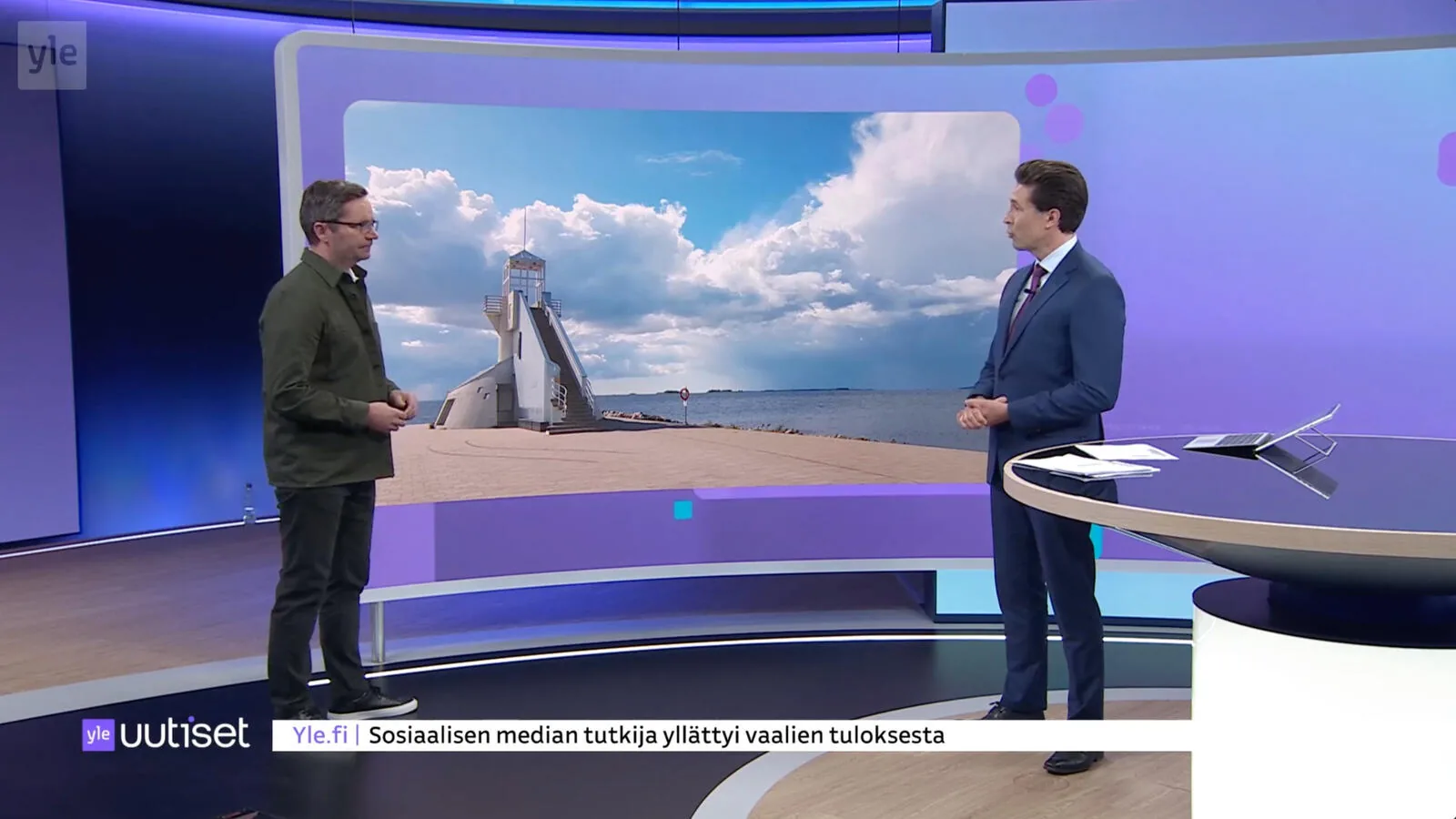
Figure 1 shows a presenter standing beside a vertical LED panel that carries a graphic, with typography on the wall behind. In a shot like this, the panel is both a picture and a light on the talent; a display-gamut figure does not, by itself, describe that light.

None of the Asia Vision pages used for studio and close-viewing work publish a TLCI score, an SSI score, a spectral power distribution, or a lighting-index test method. That is the starting point for the RFQ: those data have to be requested and confirmed on the quotation for the proposed series, pitch and drive condition, or the acceptance has to be defined as a camera test on the wall. Do not infer a TLCI or SSI figure from DCI-P3 coverage, from contrast, from brightness, or from an anti-glare or anti-moiré description.
What those pages do publish, and what remains useful for the display side of the same brief, is the following. E-PRO is a high-end rental series specified for XR and virtual production, with SMD P1.953 / P2.6 / P3.91 and COB P2.6 / P3.91 / P4.81, a 250 × 250 mm module, 500 × 500 / 500 × 1000 mm cabinets, a plastic backshell indoors and die-cast aluminium outdoors. The page states that it is purpose-designed for XR film and video production and that refresh and camera compatibility take priority over peak brightness on a stage-lit volume. It does not publish a colour-gamut, TLCI or SSI figure.
RH-PRO COB is the flagship fine-pitch series for luxury corporate headquarters, premium broadcast studios and government command centres: P0.78 / P0.93 / P1.25 / P1.56, flip-chip COB, module 300 × 168.75 mm, refresh ≥7680 Hz, brightness 800–1200 cd/m², contrast ≥25000:1, viewing angle 178° H/V, DCI-P3 ≥99%, and dual power, dual receiver and dual signal. It mentions an anti-glare, anti-moiré, anti-blue-light surface for extended viewing in boardrooms and studios, and it states that each LED chip is individually calibrated for uniformity. Those are display and surface claims. DCI-P3 ≥99% is a gamut coverage figure, not a TLCI or SSI score. COB CV-PRO is a fine-pitch COB series for high-end conference rooms, command centres, home theatres and exhibition halls, with P0.9375 / P1.25 / P1.5625 / P1.875 (common anode), real and virtual pixel, a 150 × 337.5 mm module, no backshell, refresh ≥3840 Hz, brightness 800 cd/m² and DC 4.2 V. It has no published gamut, TLCI or SSI figure. If a project uses CV-PRO in a close-viewing studio or preview room, lighting-index data still have to be asked for, not assumed.
A useful colour-acceptance clause separates lighting data from display data, and it names the condition:
Do not copy a single “broadcast colour” or “camera-ready” sentence from a brochure into a bid. Two walls can both be described that way and still light a face differently. If a bidder offers a typical or catalogue TLCI or SSI value, ask whether it applies to the exact series, pitch and luminance you are buying, and have it confirmed on the quotation. Asia Vision will not invent a TLCI or SSI score that the product page does not publish.
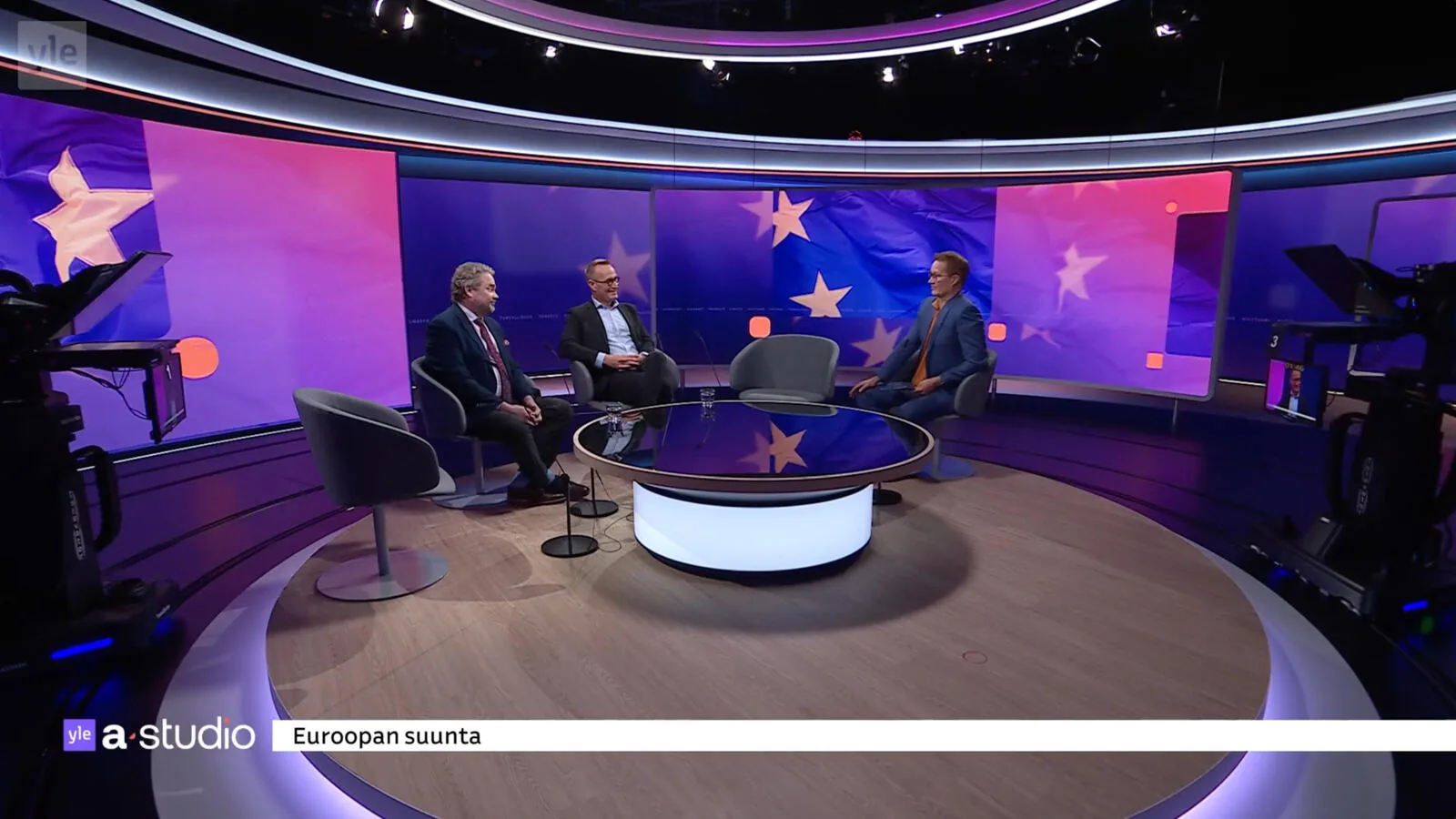
Figure 2 shows an on-air desk with guests, cameras at either side and curved LED walls behind. Acceptance should include how those walls look on the house cameras, and how they light the people at the desk, not only a laboratory gamut figure.
A workable RFQ states whether the wall is a light as well as a display, and it asks for named data:
Attach the camera list, whether people will work in front of the wall, the intended white point, and any house lighting-index criterion you already use. If your colourist or lighting director has already set a minimum index or a reference illuminant, put that in the annex rather than asking the bidder to invent a pass mark. Product pages publish a 3-year warranty and 18-day standard delivery; a spectral report, a calibration visit or a camera test can take longer, and that time should sit in the programme.
For a premium fixed broadcast or studio wall, start with RH-PRO COB. For an XR or virtual-production wall that will also light talent, start with E-PRO. For a close-viewing conference, preview or command room where a studio-style colour clause is still required, start with COB CV-PRO. Send the wall size, whether people stand in front of it, the house camera if you have it, and any lighting-index or white-point note already in the brief. We will confirm the cabinet series and, on the quotation, any spectral, TLCI or SSI data that can be offered for that configuration. We will not invent a TLCI or SSI score, or treat DCI-P3 coverage as if it were one. Start the enquiry through the contact form.
Specifying a studio wall that will also light talent? Send the wall size, whether people stand in front of it, and any house camera or lighting-index note you have, and we will reply with the cabinet data and any spectral or index figures that can be confirmed for that configuration. Start a project enquiry.