By Cassie
What does a Poland LED display importer need to know? Importing LED displays into Poland means importing into the EU customs union, so the rules are European: CE marking, import VAT, WEEE producer registration, and a customs entry filed through the Polish system. This 2026 guide explains each step.
Poland is one of the larger LED display markets in Central Europe, with demand from retail, transport, sports, and a growing events sector. Importing there means importing into the European single market, and once goods clear in Poland they can move freely to other member states.
A Poland LED display importer who completes the EU compliance steps and the national producer registrations before ordering clears cargo without difficulty. The obligations that catch buyers out are the electronic waste registration and the labelling requirements.
Before the paperwork, it helps to know who is actually buying LED displays in this market — the demand pools are not identical, and they buy differently.
| Demand pool | What they buy | How they buy |
|---|---|---|
| Retail and logistics | Warehouse signage, store displays | Logistics hub role drives industrial demand |
| Public and municipal | City screens, information displays | EU-funded projects with tender rules |
| Events and sports venues | Rental walls, stadium perimeter | Growing event sector, stadium upgrades |
| Corporate and control rooms | Fine pitch indoor walls | Shared services and BPO fit-outs |
Poland's position as a logistics and manufacturing hub for Central Europe means buyers often re-serve neighbouring markets. WEEE registration and EU conformity land on the importer, so compliance support is a real differentiator.
A Poland LED display importer needs an EORI number, which identifies the business to European customs authorities. Goods are declared through the Polish customs system, and import VAT is charged at the Polish standard rate on the value of the goods plus freight and duty.
Duty depends on the commodity code and the origin of the goods. Many electronic products enter the EU at a low or zero duty rate, but the rate must be confirmed for the specific code rather than assumed. Classification is done line by line.
| Step | What Is Required | Who Handles It |
|---|---|---|
| EORI registration | Customs identifier for the business | Importer |
| Customs declaration | Entry with commodity code and value | Importer or broker |
| Import VAT | Polish standard rate on value plus freight | Importer |
| CE marking | Product conformity for the EU market | Supplier, verified by importer |
| WEEE registration | Producer responsibility for e-waste | Importer |
| Polish labelling | Market information in Polish | Supplier |
Inspect the freight forwarder's documentation before dispatch. A missing certificate of origin can push a zero-duty consignment into a chargeable duty rate, a problem covered in the origin certificate guide.
LED displays placed on the Polish market require CE marking, supported by a declaration of conformity and technical documentation. The marking covers the applicable directives, typically electromagnetic compatibility, low voltage safety, and the restriction of hazardous substances.
| Requirement | What It Covers | Evidence to Hold |
|---|---|---|
| CE marking | Product conformity for the EU | Declaration of conformity |
| EMC directive | Electromagnetic compatibility | EMC test report |
| Low voltage directive | Electrical safety | Safety test report |
| RoHS | Hazardous substance limits | Supplier declaration and test data |
| Technical file | Supporting documentation | Datasheet, drawings, reports |
| Polish labelling | Market information in Polish | Product and packaging text |
Keep the technical file for the period required by the rules, because an authority may request it after the goods are in service. A file that exists only in the supplier's office is not the importer's file.
Poland applies producer responsibility to electrical equipment placed on the market, and a Poland LED display importer is treated as the producer for these purposes. Registration with the national system must be complete before goods are sold, and quantities placed on the market must be reported.
Confirm the registration route and the reporting obligation before the first sale. Placing equipment on the market without registration is a compliance breach, and the correction costs more than the original registration would have.
| Obligation | What Is Required | Consequence If Missing |
|---|---|---|
| WEEE registration | Register as a producer of electrical equipment | Unable to sell lawfully |
| Quantity reporting | Report units placed on the market | Compliance breach |
| Producer mark | Display the registration identifier | Inspection finding |
| Take-back plan | Arrange end-of-life handling | Obligation unmet |
| Records | Keep sales and take-back records | Audit difficulty |
| Packaging | Comply with packaging obligations where applicable | Additional breach |
Confirm the position with a local compliance adviser rather than relying on a general understanding of EU rules. National implementations differ, and the Polish requirements include obligations beyond the EU-wide framework.
Import VAT is recoverable for a VAT-registered business, so the effect is on cash flow rather than on final cost. A large screen order ties up the VAT until the return is filed, and the timing should be planned with the accountant before the first shipment.
| Cost Element | Basis | Notes |
|---|---|---|
| Customs duty | Commodity code and value | Confirm the rate for the specific code |
| Import VAT | Value plus freight and duty | Recoverable for registered businesses |
| Broker fee | Per declaration | Varies by broker |
| Port and storage | Per day after the free period | Mounts if documents are late |
| WEEE fees | Per unit or by weight | Budget the registration and reporting |
| Inland transport | By distance and size | Confirm delivery to site |
Model the full landed cost including the compliance fees rather than only the invoice and freight. The producer responsibility fees are small per unit but appear in every shipment, and leaving them out distorts the comparison.
Poland has a temperate climate with cold winters, and outdoor screens must handle sub-zero temperatures and snow load. Indoor installations are less demanding, but the certification and labelling requirements apply in both cases.
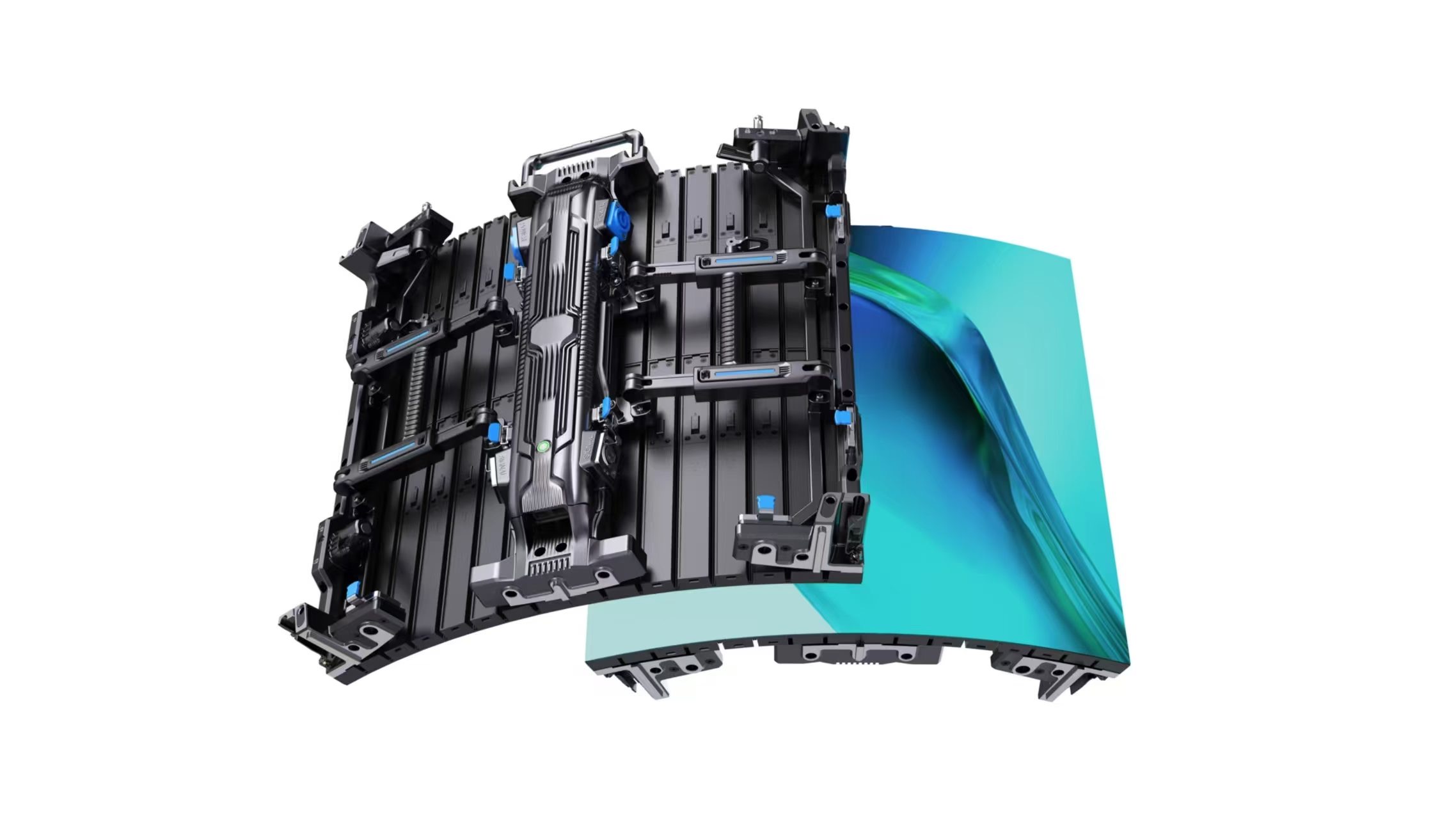
For Polish sites, low winter temperatures make cabinet construction and sealing the deciding factors — the X Series uses standard 500×500mm cabinets with front/rear service, and the COB EF outdoor series is sealed against snow-melt and moisture ingress.
| Condition | Risk | Specification Response |
|---|---|---|
| Winter cold | Thermal performance and cable stiffness | Cold-rated components and cables |
| Snow load on outdoor screens | Structural load | Engineered mounting and load review |
| Temperature swings | Condensation inside cabinets | Acclimatisation and ventilation |
| Rain and humidity | Water ingress | High ingress rating |
| Long transport from the port | Vibration damage | Crated transport and corner protection |
| Dust in urban sites | Cooling path blockage | Filtration and cleaning schedule |
Confirm the operating temperature range against the site conditions rather than the national average. A screen installed in an outdoor venue in the north faces a different requirement from one in an indoor shopping centre.
Ask every candidate the same questions and record the answers. For Polish projects the CE evidence and the cold-weather specification matter as much as the price, and the CE file decides whether the goods can be placed on the market at all.
| Question | What a Strong Answer Looks Like | Warning Sign |
|---|---|---|
| CE documentation | Declaration and reports for the model | Certificate for a different model |
| Cold-weather rating | Stated minimum operating temperature | Temperate ratings only |
| Polish labelling | Supplied with the goods | English only |
| Driver IC and power supply | Named brand and exact model | Brand only, no part number |
| Spare parts availability | Stated period in writing | No commitment given |
| Service response | Stated time by fault severity | Answer avoided |
Confirm the components in writing and require written approval for any substitution. A supplier facing a component shortage may change a part quietly, and the change only appears when the screens arrive.
Each mistake is inexpensive to avoid during planning and costly after the goods land. A Poland LED display importer who completes the EU and national registrations and assembles the technical file avoids most of them.
Asia Vision Technology manufactures LED displays in Shenzhen and supplies importers, distributors, and contractors across the EU. The factory produces the CE declaration and test reports Polish importers need, supplies Polish labelling where required, and holds spare parts for the stated warranty period.
For Polish projects the company supplies rental cabinets for events, fine pitch screens for retail and corporate work, and outdoor displays rated for cold conditions. OEM and ODM production is available for distributors building their own range.
Related reading: Bolivia LED Display Importer Guide 2026: IBNORCA, Duty