By Cassie
What does a Philippines LED display importer need to know? Importing LED displays into the Philippines means clearing goods through the Bureau of Customs, confirming the product standard position, and specifying equipment for a tropical climate with a typhoon season. This 2026 guide explains each step.
The Philippines is an active LED display market, with demand from retail, malls, transport, and events across a large archipelago. Most screens are imported from China, and the process is manageable for buyers who prepare documentation before dispatch.
A Philippines LED display importer who confirms the registration and standard position in advance clears cargo without difficulty. The climate and the archipelago geography are the two factors that shape the specification and the delivery schedule.
Before the paperwork, it helps to know who is actually buying LED displays in this market — the demand pools are not identical, and they buy differently.
| Demand pool | What they buy | How they buy |
|---|---|---|
| Retail and mall chains | Indoor signage, atrium screens | Mall culture, brand-driven |
| BPO and corporate | Lobby walls, control rooms | Large office and BPO sector |
| Events and entertainment | Rental walls | Active concert and event market |
| Government and transport | Information displays | BOC entry, product standards |
The Philippines is an English-speaking market with strong integrator presence and a large BPO-driven corporate base. Direct enquiries from end users are more common here than in some ASEAN markets.
Goods entering the Philippines are declared to the Bureau of Customs, and the importer needs accreditation and a broker who can file the entry electronically. The declaration records the classification, value, and origin of every line.
Classify each line separately. A complete screen, its power supplies, its control cards, and its mounting steel may each fall under a different heading, and a single-code declaration for a mixed shipment invites a query.
| Step | What Is Required | Who Handles It |
|---|---|---|
| Importer accreditation | Registration with the customs authority | Importer |
| Broker appointment | Accredited customs broker | Importer |
| Customs declaration | Entry with classification and value | Broker |
| Duty payment | Assessed on the customs value | Importer |
| VAT payment | Value added tax on the value | Importer |
| Product standards | Compliance where applicable | Supplier, verified by importer |
Work with a broker who understands electronic goods and the specific port of entry. Clearance practice differs between Manila and the regional ports, and a broker familiar with the route reduces the chance of an avoidable query.
Certain products sold in the Philippines require compliance with national standards, and the requirement depends on the product category. Confirm the position for the specific model rather than assuming a general rule applies.
Ask the supplier for safety and EMC test reports before the order. A supplier who can provide evidence makes the compliance step straightforward, while one who cannot leaves the importer to obtain it after manufacturing.
| Requirement | What It Covers | Evidence to Hold |
|---|---|---|
| Safety test report | Electrical safety of the equipment | Report naming the offered model |
| EMC test report | Electromagnetic compatibility | Report naming the offered model |
| Standards compliance | Where a standard applies | Certificate for the model |
| Technical file | Drawings and specifications | Complete file held by the importer |
| Product labelling | Information for the market | Label artwork |
| Warranty documentation | Coverage terms | Written warranty statement |
Keep the technical file after the goods are sold, because the authorities may request it during the life of the product, and the same file supports a warranty claim.
Duty is assessed on the customs value using the classification and the origin of the goods. The Philippines applies value added tax on top, and several port and handling charges also apply, so the landed cost exceeds the invoice value.
| Cost Element | Basis | Notes |
|---|---|---|
| Customs duty | Commodity code and value | Rate varies by code |
| Value added tax | Value plus duty plus freight | Standard rate applies |
| Broker fee | Per declaration | Varies by broker |
| Port and terminal charges | Per container | Charges differ between ports |
| Storage | Per day after the free period | Mounts if documents are late |
| Inland transport | By distance and mode | Archipelago delivery adds cost |
Model the full landed cost including the domestic leg where the site is on a different island from the port of entry. Domestic shipping adds cost and time, and it is slower and less predictable than the international leg.
The Philippines has a tropical climate with high humidity year-round and a typhoon season that brings heavy rain and high winds. Outdoor screens face all three, and coastal sites add salt air to the list.
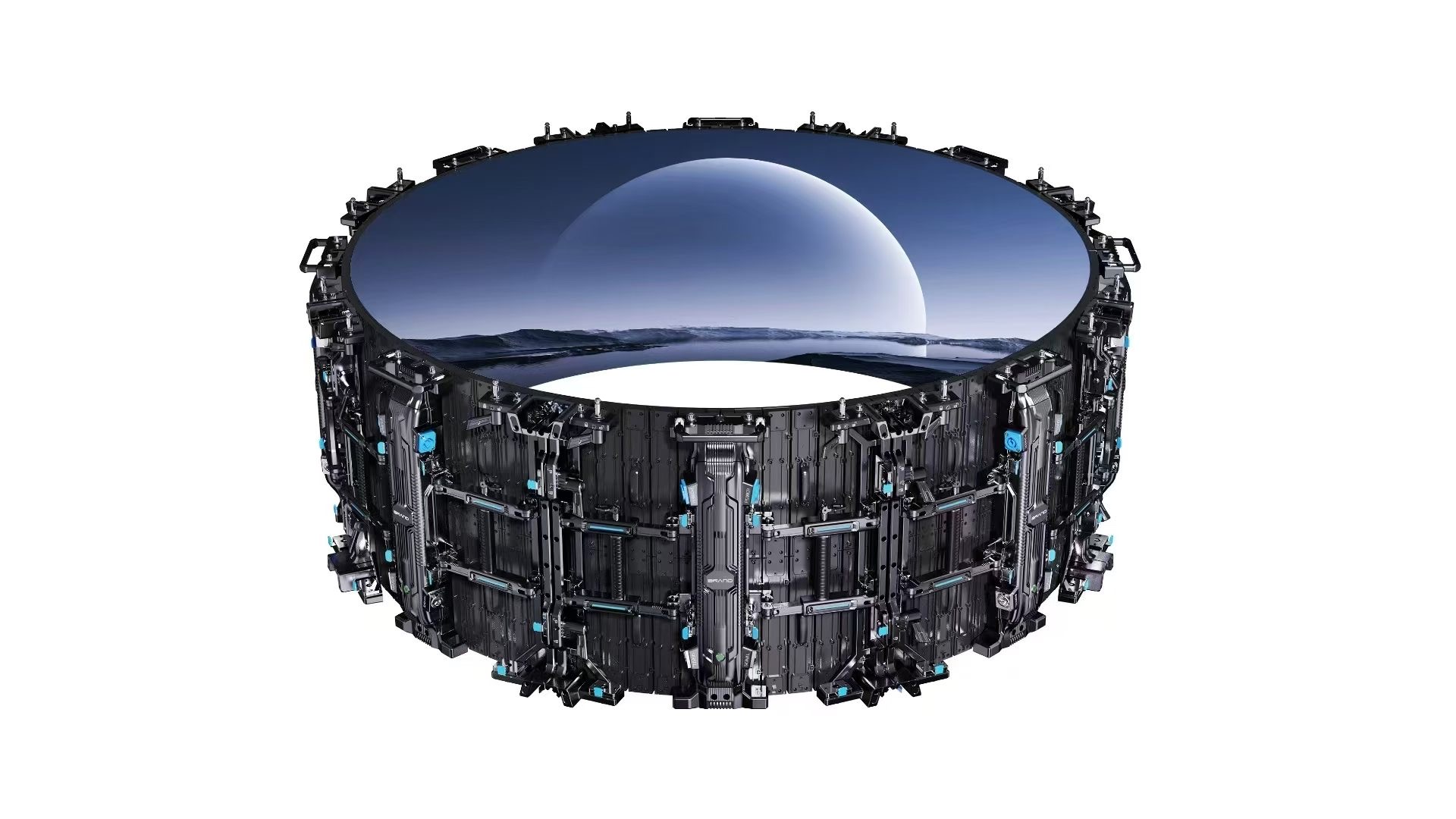
For Philippine sites, humidity and salt-laden coastal air make sealed cabinets the deciding factor: the COB EF outdoor series (IP65, 3000 nits) and the COB ZH touring series (sealed, 3400–4000 nits) are built for exactly this duty.
| Condition | Risk | Specification Response |
|---|---|---|
| Year-round humidity | Connector corrosion | Sealed cabinets and contact treatment |
| Typhoon-season rain | Water ingress and wind load | High ingress rating and structural design |
| High winds | Panel movement and structural load | Engineered mounting and wind review |
| Coastal salt air | Accelerated corrosion | Corrosion-protected hardware |
| High ambient heat | Thermal stress on power supplies | Higher temperature rating |
| Unstable supply voltage | Driver damage | Power conditioning on site |
Where the site is exposed to typhoon winds, involve a structural engineer in the mounting design. The load on a large outdoor screen during a storm is substantial, and the mounting design should be reviewed for the actual exposure.
Most LED display cargo reaches the Philippines by sea, with air freight reserved for urgent spare parts. Transit times are comparatively short within the region, and the total lead time includes production and clearance.
| Stage | Typical Duration | What Can Delay It |
|---|---|---|
| Production | 15 to 25 working days | Component availability and queue |
| Inland to port and export | 3 to 5 days | Booking availability |
| Sea freight | Shorter regional route | Routing and port congestion |
| Import clearance | 2 to 6 days | Documentation queries |
| Domestic delivery | 2 to 7 days | Inter-island transport where relevant |
| Total | Approximately 4 to 7 weeks | Add a buffer and the domestic leg |
Add the domestic leg explicitly where the site is outside Luzon. Inter-island freight is slower than the international route and should be planned as a separate stage rather than assumed within the port-to-site time.
Ask every candidate the same questions and record the answers. For Philippine projects the tropical and wind specification matters as much as the price, along with the documentation position.
| Question | What a Strong Answer Looks Like | Warning Sign |
|---|---|---|
| Tropical specification | Sealing and corrosion detail given | Temperate-market ratings only |
| Wind load capability | Structural rating stated | Not addressed |
| Standard evidence | Reports supplied for the offered model | Evidence promised later |
| Spare parts availability | Stated period in writing | No commitment given |
| Service response | Stated time by fault severity | Answer avoided |
| Reference projects | References in similar climates | Logo list with no contacts |
Confirm the components in writing and require written approval for any substitution. A supplier facing a shortage may change a part quietly, and the change only appears when the screens arrive.
Payment usually follows a deposit and balance structure, with a deposit at the order and the balance before shipment. The split depends on the relationship and on whether the product is standard or custom.
| Term | Typical Structure | Suited To |
|---|---|---|
| Deposit and balance | 30 percent deposit, 70 percent before shipment | First orders and smaller projects |
| Higher deposit | 50 percent deposit, 50 percent before shipment | Custom or non-standard products |
| Letter of credit | Bank instrument against documents | Large orders between new parties |
| Payment after inspection | Balance released on inspection pass | Where an inspector is used |
| Escrow | Funds held until delivery is confirmed | First transactions with a new supplier |
| Open account | Payment after delivery | Established long-term relationships |
Whatever the structure, tie the final payment to verifiable evidence such as a passed inspection or shipping documents that match the order.
Each mistake is inexpensive to avoid during planning and costly after the goods land. A Philippines LED display importer who confirms the compliance position, specifies for the climate, and plans the domestic leg avoids most of them.
Asia Vision Technology manufactures LED displays in Shenzhen and supplies importers, distributors, and contractors across Southeast Asia. Cabinets are produced with sealing and corrosion protection for tropical markets and can be specified with the structural rating the site requires.
For Philippine projects the company supplies rental cabinets for events, fine pitch screens for retail and corporate work, and high-brightness outdoor displays for advertising. OEM and ODM production is available for distributors building their own range.